

6Qs with Christine: Elsa Jayne / Moonii on growth, identity, and music’s magic
Elsa Jayne grew up with music in the air, from Vangelis to Alanis, from her dad’s record collection to her own piano and guitar experiments. Today she is reshaping her sound through Moonii, a project rooted in courage, identity, and healing. Our conversation traces her journey from open mic nights in Waterloo to writing songs about resilience on the East Coast, exploring how her Anishinaabe and settler identity, faith deconstruction, and love of pop melodies continue to guide her work.
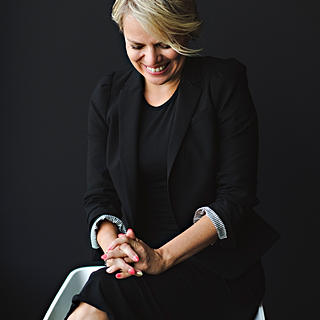
Photo of Elsa Jayne Music is so transformative and magical - Elsa Jayne Image if guitars and items related to Elsa Jayne's music
What first pulled you toward music? I am curious if there was a moment when it shifted from something private to something you knew could be your path.
Music has always been synonymous to who I am and I grew up with music floating through our family home. In the early 90’s my dad would play artists like Enya, Bjork, The Proclaimers. Songs like “La petite fille de la mer” by Vangelis shaped my childhood and have carried me to where I am as a songwriter now. I just realized that the song title translates to “little girl of the sea” and I think it’s so beautiful how I ended up here in Mi’kma'ki (the East Coast), living by the ocean!
I was gifted my first acoustic guitar at 15 and started learning pop songs and playing them for my friends. At 16 I was writing my own songs and performing them at my high school’s open mic night. But before my teens I was often showing off what I had learned in piano lessons and playing my Royal Conservatory pieces as fast as I could to impress my friends! And before that I was standing on our table entertaining my parents' dinner guests with “Hallo, My Baby!”. I didn’t see myself as an artist or singer songwriter until my late teens in college where I was studying music. I was often supporting other people on bass guitar or singing harmonies. This belief in myself grew and grew until it was a natural thing for me to write songs for myself and step into being a performer. It was actually my upright bass teacher, George Greer, in Waterloo, ON who was honest with me and said at one of my lessons, “You seem to be talking a lot about writing your songs, and I think this may be your passion…not bass.” He was right! I shifted things pretty much immediately and a year or so later I released my first self titled album, “Elsa
Jayne” in 2008.
Everyone evolves as they create, I am curious how you feel your own work has grown over time. What influences, people, experiences, sounds, have shaped the music you are making now compared to when you first started?
When I first started songwriting I would settle pretty quickly on the structure, melody, lyrics and think…“That’s good! That’ll do!” And I would perform and release it without much revisiting or editing. I do see this characteristic to be pretty beneficial as a musician. It allows me to create more freely overall. With some maturity though, I realized that taking a bit of a critical eye to my songs can really push them and also make for a more fulfilling songwriting experience for myself. These days I will ask myself the question, “If I found this song online, would I listen to it? What could take it to the next level? Is this as good as it can be?” I am trying to be as true to myself as possible with my songs, not just in terms of lyrical and musical content, but asking, “have I used my abilities to their extent?” Although I am always striving, I do not aim for perfection. I do not believe art is static…it can change and evolve. I have had songs that I have performed for audiences, but then added a bridge a year later. For better or worse, my personal life always makes its way into my music. Listening through my albums is a bit like reading journal entries. Every encounter, person, experience has shaped me as an individual and this is always reflected in my music. Save for my wizard rock project The Lovegoods which was all themed around the world of Harry Potter. I recently dropped this project since JK Rowling has expressed very damaging views, transphobic views. I have been consistently writing about my feelings, and at times this has been oriented around people, my faith, the deconstructing of my faith, and my identity as an Indigenous person. Music has helped me make sense of all these things and always will. My dad’s own music taste shaped me as a kid, and the music of the 90’s did as well. I remember being so in awe of Alanis Morissette’s “Jagged Little Pill” album when kids on the playground were playing it on their Walkman. My first cassette was “The Sign by Ace of Base” and I was obsessed. Pop music has always been influential and although I wouldn’t describe my genre as pop, my melodies are often quite catchy because I love
a catchy pop melody. I was deeply immersed in evangelical Christian culture in the early 2000’s and the rock music from those bands had a big impact on me and shaped my musical direction. I have since left behind the dogma, but have kept the rock! Ha! I wrote a song for Moonii called “Purity Culture” and it is a little nod to my own dismantling of purity culture which was so prevalent in the evangelical church and the western world when I was a youth. The songs that I write these days for Moonii reflects my own evolution as someone who has learned to take up more space as a woman and who has shed a lot of shame around sexuality.
I am imagining it is not easy to share songs that feel so personal. What has it been like putting that kind of work into the world, and how do you look after yourself in the process?
I learned a lot after releasing my last full length album, “All My Relations” which came out in 2018 under my Elsa Jayne name. Those songs were written at such a vulnerable time. The song “Tears Coming On” is about my experience with miscarriage. The song “Civilized” is about residential schools. I realized that singing these songs in a live context was taking an emotional toll on me and it wasn’t sustainable. Although the songs meant so much to me, I needed to shift my writing so that I could perform my songs again and again without feeling such heaviness. I learned that I can write therapeutically and those songs can be just for me. Recently for Moonii I wrote a song and brought it to the band and only at practice realized that it wouldn’t work because I couldn't sing it through without crying. So I set it aside and someday I might revisit it! I look after myself by setting boundaries which is something I didn’t do in my earlier years.
I see so much courage in the way you are evolving as an artist, still shaping your sound and putting pieces of it out into the world. What does this stage feel like for you, to be experimenting and growing?
Thank you so much! Wow, that’s so kind. Right now things feel very new to me because I am in a big life transition and am rediscovering who I am outside of the church and outside of who I thought I should be. I often feel like a teenager…but with a lot more life experience. My songs and my spirit both feel vulnerable and very empowered. I hope that others can find their own confidence by witnessing my own growth. I am grateful to have a wonderful band in Moonii and to have developed my songs alongside amazing musicians.
Has a listener ever said something about one of your songs that caught you off guard, maybe even changed how you see the song yourself?
Yes for sure. When I put my songs out into the world I just hope that people will listen, but I never expect my music to have an impact, but I have learned that it really does! Music is so transformative and magical. I have received emails from people saying that my songs have been a comfort through a hard time, or that every year they listen to my song as part of a special tradition. It’s such an honour to be a part of people’s lives like
this! One of my songs called “Take This” from my Heart EP, was a comfort to a mom whose son had passed away and she interpreted the lyrics quite differently than how I intended them and I'm so glad she was able to do that.
As an Anishinaabe/settler artist, your identity sometimes threads through your work quietly and sometimes more directly. With the National Day for Truth and Reconciliation coming up, what does that day stir for you personally, and does it influence how you think about music’s role in healing or community?
Oof, it’s a strange day for me, to be honest. It’s so important and I have mixed feelings. Every year as it approaches I feel a bit of dread. There is a heaviness that we feel as Indigenous people when we think of the lives of little ones that were taken and the
abuse they were forced to endure, not to mention the following generations that suffered at the hand of the church and our Canadian government who were responsible for residential schools. In Haudenosaunee and Anishinaabe teachings, we understand that the decisions we make now will affect our ancestors seven generations from now. The same is true for the trauma that has followed the residential school children and their families. Families are still very much affected by the atrocities that happened all over Turtle Island and will be healing still for generations to come. I also feel such a sense of connection to other Indigenous folks on Orange Shirt Day / Truth and Reconciliation Day. Our resilience and strength is so inspiring to me and I always wear my ribbon skirt with pride. It’s also important to me to spend time with my kids and share about our beautiful culture, and the history of residential schools. I think that the Canadian Government likes to pat themselves on the back with days like Truth and Reconciliation Day without putting in the actual work, much like their recognition of Palestine as a State. I am noticing that it’s the Indigenous people still doing much of the work around healing and advocating for the land and the rights of our people. Music is so healing. I have seen this in my own life and many others. My song “Strong Currents” is about our resilience as a people and it makes me feel so proud whenever I sing it.
Bonus Question: You come from a family of creative people, but I would love to hear about your own sparks. What fuels your creativity?
My creativity is often inspired by nature and driven by my inner world. I use the natural world as an analogy to express my own feelings in many of my songs. When it’s time to write a new song I get this sense of excitement and it just has to come out! Often it’s a melody in the shower, or I do just sit down intentionally with my guitar after a hard day…or an uplifting day! Music has allowed me to navigate my own thoughts and feelings and I genuinely have so much fun piecing it all together in song. I am fuelled by a need to be deeply seen. I think we all want to be seen by one another and music is that connection for me.
This series grows through word of mouth and the creative people who nudge me toward the next conversation. If you know someone with a story worth sharing, I’d love to hear about them.
If something here made you smile, pause, or think, share it. Tag a friend. Leave a note. I read every one, and you never know whose story might show up next.


