

Fonts at the Super Bowl and Other Small Things. 6Qs with Jamie Chang.
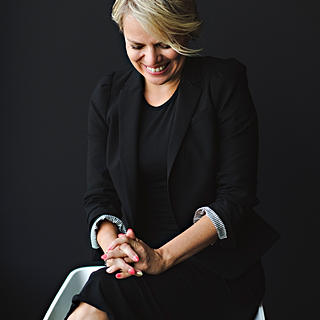

Most of us take letters for granted. Jamie Chang builds them from scratch. From summer calligraphy lessons in Taiwan to typefaces used by Apple, DINAMO, and Canada Type, Jamie has made a career out of shaping the very forms we read every day. In this 6Qs, he talks about the discipline, humour, and unexpected parallels that come with life as a type designer.
What first sparked your love of type and design? Did you realize early on that letters were going to become your creative language and career?
I attribute much of my interest of design to my mom, whom prior to becoming the best stay at home mom one could ask for, was an art director for a major ad-house in Taiwan. She made sure I was always engaged in the arts and languages, and picked me up and dropped me off from my extracurricular activities. In the summers, she would take me back to Taiwan, where I would attend camps, art classes, and learn Chinese calligraphy. She helped me grow to appreciate well made and well designed things, no matter the medium.
My love of type design came from an interesting in designing icons and logos. I have always had a fascination with drawing shapes and working in a purely black and white medium. No shades of grays. I was introduced to the medium during my time at YSDN. I was good with vectors and designing type just seemed to be the next step.
Type design also happens to be a wonderful intersection of history and culture, technology, and the human perspective. It’s become the lense in which I view the world.
You treat every letter as a character in a larger system. How does that perspective guide your design decisions today?
I have a deep fascination with how things work, and the systems that guide them. Type design just happens to be a medium that allows me to explore shapes in more restricted setting. We often forget, but our letters were originally created from interactions between us, our mark-making tool, and the medium onto which we create our marks. The system is within us and without. From our hands to the tools in which we create. In my practice I do my best to bridge the gap between the roots of our letterforms and the context in which they need to fit into.
Your typefaces have appeared in global campaigns, from publications to the Super Bowl. What does it take to design a system that can carry emotional weight across brand and context?
I always get a pep in my step when I see my typefaces in use. I really can’t take much credit when my typefaces are used well. I think the much of it comes down to the designers, and their ability to recognize how my typefaces fit into their narrative and aesthetic they are trying to achieve.
Type design can often be quite an intuitive process. Our perception of letters is largely contextual. Zuzana Licko said it best - “we read best what we read most”. This philosophy carries into how type designers design. Our shapes are, more often than not, designed to fit into their context. For example, on a larger scale, we can see a Didot inspired typeface, which connotes to us, fashion, high-end, sophisticated etc. Where does that feeling come from? Do the forms naturally tell us that, or is it a learned attachment? Good type designers, I feel, pick up on these cues to a minuscule level and are able to recognize the different emotive qualities of shapes, allowing them to pick and choose shapes and curves for their purpose.
You’ve collaborated with Apple, Canada Type, DINAMO, and The Northern Block. Is there a project that stuck with you, maybe one that changed how you approach type or identity?
The process is similar from project to project, but what you take away from each can be quite different. I think I learned the most from the first typeface I tried to ‘complete’. It was a simple slab serif, and marginally atrocious. I spent a good couple of weeks-months trying to dial the shapes in to no avail. Type design as a vocation can often be a test of one’s mental fortitude, and how much you are willing to ‘suffer’ for your craft.
Designing type can be a deep dive into detail.When your creative energy runs low, what helps you reset or reconnect with your process?
I think it’s important to take a step back from your designs from time to time. Let it brew, so to speak. I’ve found that some of my best ideas and work come from taking break on a project. It’s easy to burn out my eyes and overload my brain when designing fonts, and having a bit of respite lets me reset and come back with a fresh pair of eyes.
What’s lighting up your brain right now, creatively, intellectually, or otherwise?
This might seems unrelated, but I’ve been having a lot of fun doing Brazilian Jiu-Jitsu for the last couple of years. There are a lot of parallels between grappling and type design believe it or not.
Bonus Question: If you had to describe your personality using only a typeface, which one would it be, and what makes it a match?
I try to infuse a little bit of myself into each typeface I create. The one I connect the most with would probably be Picholine Antique. It’s a solid but soft slab-serif that is jovial and bright.
Something I aspire to be on my worst of days.
Want to see Jamie’s letters out in the world? You can explore his typefaces on Adobe Fonts
Know someone creative or curious, or doing something cool in their own way? That’s exactly who I love talking to. I’d love to hear about them or from them.
Did a line or moment from this interview stick with you? Leave a comment, send a message, or tag someone who might want to be part of this series. You never know whose story will show up next. I read every one.


