

Amanda Amaral on writing the book she wishes she’d had as a child
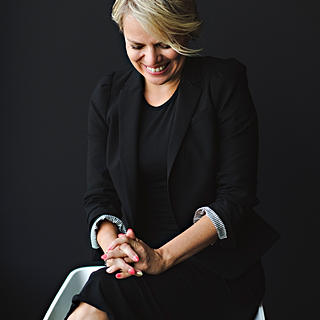
When I met Amanda Amaral at this year's Women of the Year Awards, I was struck by the impact she was making through her work. Her book, My Invisible Friend ADHD, is helping children better understand themselves while reminding them that their differences are something to embrace, not hide.
In this conversation, Amanda reflects on writing the book, quieting her inner critic, finding self-acceptance, and why helping children feel seen continues to inspire everything she creates.
Amanda Amaral Amanda Amaral's book My Invisible Friend book and character Amanda Amaral at the Woman of the Year Event
We were both nominated in the Arts and Culture category at this year's Women of the Year Awards, and you took home the award. What does that recognition mean to you?
Hearing my name announced and walking across that stage was really an out of body experience. In that moment, it felt like all the moments in my journey – the good, the challenging, the sad, joyful, burnt out, inspired – had all led me up there. To me, art is an honest, raw reflection of our layered human emotions and experiences so when you share your art with the world, you're really sharing a piece of your heart and story and hoping it will resonate with people. This award felt very validating and reassuring – like a nod that I'm on the right track and to keep going and keep creating because it means something to the world. I am also so grateful to this book’s illustrator, Lohana Sandy, for making this book possible and bringing the vision to life with her dedication and incredible artwork. Winning an award was never the intention behind this journey. but l am so grateful to have received it.
When you were writing My Invisible Friend ADHD, what part of the story felt most important to get right?
Having ADHD is complex and so it was important for me to find the right balance between educating readers on the lived experiences and challenges of those living with ADHD while also making sure the children with ADHD who read the book felt seen in a positive light. I wanted children to know that although they may struggle in some areas, they also have many wonderful strengths and talents and should feel empowered and confident in knowing that their uniqueness is a gift to the world.
What’s something you've learned about yourself through the process of writing and publishing a book?
All my life I’ve battled a very harsh inner critic that tries to convince me that what I do is never good enough, even when it’s pretty great. I wrote this book to inspire children to create a positive inner narrative and build up their self-esteem and self-acceptance – and by writing it, I also am simultaneously teaching myself the same lesson and healing and rewriting those narratives in me.
Who helped you feel seen when you were growing up?
As a child, feeling seen was rare for me. But because it was rare, it made it extra special and impactful when someone did see me and my gifts – whether it was a teacher, a mentor, a friend. It is exactly because of my own experience that I know firsthand that just one person – or just one book! – can definitely make an impact in the way a child sees themselves, their potential, and their place in the world, especially when they might not feel seen very often. Something as simple as saying “Wow!! You are really so talented at X” can help form that belief in a child’s sense of self.
Your work focuses on belonging and self-acceptance. What’s something you’ve become more comfortable embracing about yourself over time?
I have learned to accept that I am not meant to be liked by everyone – and that someone not vibing with me doesn’t mean I automatically need to analyze and fix or mask those parts of me they don’t like. What one person defines as annoying or cringey or irritating, another person may completely love and appreciate. Just like every art piece has a unique style that is interpreted differently depending on the onlooker, the same is true with humans. Some people will absolutely love you, others could be repulsed, others may simply shrug and proceed onto the next. But that’s the beauty of art and that’s the beauty of people, too – that we are all different!
What’s giving you hope right now?
The fact that my book has resonated with so many people gives me hope. The fact that I “came out” as having ADHD and have been recognized with platforms and awards instead of being shamed for it gives me hope. The fact that parents see my book and excitedly buy it for their children to support their journey instead of deny it gives me hope. There is still much to do in erasing the stigmas, stereotypes, and misinformation surrounding ADHD, but the world seems to be much more receptive, open, supportive, and informed than when I was a kid. And because of that, I am hopeful that each generation of children will live in a increasingly more accepting world.
Bonus Question: You wrote about an invisible friend. Did you have an imaginary friend growing up?
I did not have an imaginary friend but I definitely believed I had invisible magical powers – like an ability to change the wind!
Amanda isn't just creating books. She’s helping children understand themselves, build confidence, and believe they belong. That kind of work has the potential to stay with a child long after they've turned the final page.
For your own copy of My Invisible Friend ADHD: https://mayamoonbooks.com/our-books
This series grows through word of mouth and the people who nudge me toward the next conversation. If someone comes to mind whose creativity inspires you, send them my way.
Until next week, Christine


