

Debbie Millman: Why Curiosity Matters
Updated: Jul 27
I knew reaching out to Debbie Millman was a long shot.
I've admired her work for years. I've been listening to Design Matters, watched her speak at design conferences, and learned from the conversations she's had with hundreds of the world's most creative thinkers. So when she said yes to answering six questions, I was genuinely thrilled.
Named one of Fast Company's "Most Creative People in Business," one of Graphic Design USA's "Most Influential Designers Working Today," and a "Woman of Influence" by Success magazine, Debbie has built a remarkable career at the intersection of design, storytelling and cultural commentary. As the founder and host of Design Matters, one of the world's first and longest-running podcasts, she's spent more than two decades interviewing more than 700 creative thinkers while shaping the worlds of branding, publishing, education and design.
What stayed with me wasn't everything Debbie has accomplished. It was the curiosity that continues to fuel her work. Whether she's reflecting on imagining stories behind grocery carts, why we want what we want, or how she's thinking about the next chapter of her creative life, every answer reminds us that curiosity isn't something we outgrow. It's something we continue to practise.
It feels fitting that, for once, one of the world's great interviewers became the interviewee.
I hope you enjoy our conversation.
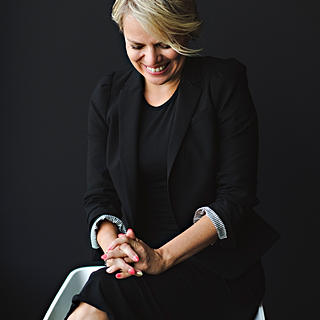
Portrait of Debbie Millman Artwork by Debbie Millman Artwork by Debbie Millman Artwork by Debbie Millman Artwork by Debbie Millman
I almost didn’t send that Instagram message because interviewing Debbie Millman felt like a long shot. Who still feels like a stretch for Debbie Millman?
Well I am glad you reached out, and oh, so many people! I think the moment you stop feeling that sense of reach, or awe, or even a little bit of terror, you are probably not stretching far enough! There are people I have dreamed of interviewing for years, and even now, after all this time, I still sometimes feel like the kid on the outside of the room, hoping to be invited in. Joni Mitchell would be one of those people, as would Michelle Obama, Stevie Nicks, Jodie Foster and Zadie Smith. The stretch is part of what keeps the work alive for me, and I never want to feel entirely comfortable doing this.
I recently learned that one of your first jobs was as a grocery store cashier, and you were fascinated by what people were buying and why. Looking back, was that curiosity about consumer behaviour, or was it really curiosity about people?
It was absolutely a curiosity about people, though I would not have had the language for that then. I was fascinated by the stories I imagined behind what people put on the conveyor belt. A person buying frozen dinners, cigarettes and cat food seemed to be telling one kind of story, while a person buying birthday candles, cake mix and paper plates seemed to be telling another. I was probably wildly wrong most of the time, but I think that job taught me to pay attention to the smallest evidence of a life. Before I understood branding, or design, or consumer behavior, I understood that people reveal themselves in tiny, wonderfully unguarded ways.
You often talk about building character, reputation, and a body of work. Which one has taught you the most about yourself?
Character has taught me the most, mostly because it is the one way of living you cannot fake for very long. A reputation is what people think of you, and a body of work is what you leave behind, but character is what you do when things are hard, inconvenient, disappointing or invisible to everyone else. I have learned the most about myself in the moments when I did not get what I wanted, was rejected or when I had to decide whether to be generous when I felt depleted, or whether to keep going when no one seemed to care.
Was there ever an interview where the conversation ended, but your curiosity didn’t?
That happens more often than I expected when I first started doing Design Matters. Some conversations end neatly, but many do not; they open a door and then time runs out before you can walk all the way through it. My conversation with Esther Perel stayed with me that way. So did my conversations with Krista Tippett, Alain de Botton, and Brené Brown. There are interviews where I leave with a sense that I have only touched the surface of a life, and rather than feeling disappointed by that, I have come to understand it as part of the mystery of talking to another human being. You can prepare for months, ask the best questions you know how to ask, and still realize that every person contains more than any conversation can hold.
Most people build a career. You seem to build a collection of curiosities. Which curiosity changed the course of your life the most?
My curiosity about why we want what we want has changed everything for me. That question began in a grocery store and followed me into branding, design, teaching, interviewing, and writing. I have spent most of my adult life trying to understand identity and desire: why people choose one thing over another, why we attach meaning to objects, why we long for belonging, why we make things, why we tell stories, why we keep trying to become ourselves. That curiosity gave me a career, but more than that, it gave me a way to look at the world.
What’s a question you’ve been asking yourself lately?
I have been asking myself how I want to spend the rest of my creative life. I do not mean that in a gloomy way; I mean it in a clarifying way. I am now nearly 65 years old. There’s not as much time in front of me as behind. Lately I have been thinking a lot about discernment, about where I should put my attention, and about how to make work that feels necessary.
Bonus Question: As a fellow doodle owner, I have to ask: who really runs the house: you, Roxane, or Maximus?
Maximus runs the house, obviously, but he does it with such sweetness and drama that we allow ourselves to believe we are in charge. Roxane and I are very committed to the illusion of authority. Max has a more sophisticated understanding of power. He knows that if he looks at us with sufficient longing, we will reorganize our lives, our schedules and sometimes our furniture around all his emotional needs.
: )
After interviewing someone who has spent more than twenty years interviewing others, I expected to learn about great questions.Instead, I learned about great curiosity.
Debbie reminded me that behind every remarkable career isn't certainty. It's a willingness to keep wondering.
And if this interview leaves you wanting more, you're in luck. Debbie has spent decades collecting extraordinary conversations. You can find them at https://debbiemillman.com/.
This series grows through word of mouth and the people who point me toward the next conversation. If someone comes to mind whose creativity inspires you, send them my way.
Until next week, Christine


