

Letting the Process Lead. A conversation with Zé Otavio
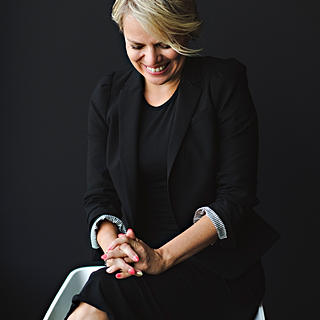
Zé Otavio’s work moves easily between bold portraiture, editorial edge, and deeply personal characters. Across mediums and styles, there is a consistent pull toward emotion, especially the kind that lives quietly in the eyes.
Drawing became central to Zé’s life during college, in the intensity of life drawing classes that shifted something from practice into purpose. Since then, his work has been shaped by a wide range of disciplines, from graphic design and collage to photography and painting, each leaving its trace on the visual language he uses today.
In this conversation, we talk about drawing as a natural form of expression, learning to be present in the act of making, how Brazilian roots and lived experience shape creative voice, and what it means to slow down and actually feel the work as it’s being made.
Zé Otavio holding one of his illustrations Illustrations by Zé Otavio Illustration by Zé Otavio Illustrations by Zé Otavio Illustration by Zé Otavio Illustration by Zé Otavio Illustration by Zé Otavio
How did you first get into drawing, and when did you feel that moment of, “This is what I want to do with my life.”
I think it all began in a life drawing class in college. At the time, I was enrolled in the morning sessions, but my teacher allowed me to also attend the evening classes. Those night sessions were a turning point for me, they felt more intense and inspiring, largely because the model was incredibly expressive in her poses. It completely blew my mind.
Although I had been drawing since childhood, it was through those drawing lessons that it became the way I most naturally expressed my ideas as an artist. Later, during college, where I earned a degree in Graphic Design, I explored a wide range of mediums, including screen printing, photography, collage, video design, and painting. I believe this combination of practices shaped the visual language I work with today and helped define my style.
Your work moves between bold portrait, editorial edge, and intimate character. When you begin a piece, what guides your decisions about the mood and the feeling you want it to carry.
In my portraits, I’ve always tried to capture the emotion held in the subject’s eyes, especially the eyes. They’re where the story begins for me. Of course, there’s often guidance from an art director, but I tend to focus less on giving exactly what’s asked for and more on what I feel the image needs. I try to bring my own vision and emotion into the work, often responding to something I sense is missing.
The more intimate characters come from a different place, one rooted in personal experience. That’s where I feel I’m working more as an artist than as an illustrator. It’s still about art, style, and meaning, but in this space I’m driven by an inner urge to express what I feel or see, or what I’ve always felt in my gut. These works explore the human condition, the ambiguity of our time, our bodies, and the way we present ourselves on social media, how we communicate desire, vulnerability, and emotion through both image and gesture.
Every artist grows in their own ways. Have you found yourself evolving in your work or process in a way that feels meaningful to you right now?
Since 2019, when I began seriously addressing panic attacks and mild depression through psychiatric and psychological treatment, my relationship with my work has changed significantly. I’m more present in the process now. I’m able to feel and enjoy what I’m doing in the moment I’m doing it.
This is ongoing, daily work—learning to truly experience the present instead of focusing only on the final result. In the past, I was always looking ahead, fixated on outcomes. Now I feel more clarity in the act of making itself, and that shift has had a real impact on how I see and develop my work.
You grew up in Olímpia, lived in São Paulo and London, and now create for a global audience. How do your memories and your Brazilian roots feed into your work today?
Growing up in Brazil made me aware that I come from a vast and deeply multicultural country. Its cultural richness, especially in music, which has always been a major influence in my life, shaped the way I see and feel the world. Even without knowing every part of the country, I feel rooted in this constant mixture of cultures, rhythms, and references.
Living in São Paulo, the largest city in South America, was a defining experience. For a long time, the city, often gray, heavy, and challenging was an inexhaustible source of inspiration for my work. I don’t speak from a place of material hardship, which is the reality for many people in Brazil, but from the sense that São Paulo often leaves little room to breathe. It concentrates many versions of Brazil alongside influences from all over the world, while also exposing a deeply pronounced social and economic inequality that is visible in everyday life, even in a city considered wealthy.
That contrast became clearer when I later lived in London. While London is also highly stimulating, it allows more space for pause and reflection, including a stronger presence of green areas and urban nature, something I deeply missed in São Paulo’s daily rhythm. We have a deeply pronounced social and economic inequality, visible in everyday life, even in a wealthy city like São Paulo.
Has a piece or process ever taken you somewhere unexpected, either while you were making it or in how someone responded to it?
When I started my career as a freelance illustrator, I felt somewhat “lost” in terms of media and style. I was mixing techniques that, at the time, weren’t usually combined. Then, when I was hired to illustrate an entire book about preparing for the vestibular exam, the art director, Fabio Bosque, guided me to use only a ballpoint pen for the whole project, as it evoked the kind of doodles teenagers make in their notebooks.
That experience became a turning point and helped define my style. Since then, line work has played a central role in my illustrations and artworks.
When you feel a little worn down or creatively tired, what helps you reconnect with making. A place, a rhythm, a ritual, or something small that resets your energy?
Walking is essential for me. I try to do it every day, especially when I’m struggling or feeling creatively drained. Stepping outside, moving, and letting my thoughts settle helps reset my energy.
Talking with friends is just as important. Simple conversations, shared time, and human connection often bring me back to myself and, in turn, back to making.
Bonus Question: If you had a free day in the studio with zero deadlines, what would you make just for yourself?
I’d finally start a large-scale painting on a canvas I’ve been postponing for years. With no deadlines, I’d allow myself the time to commit fully to it, working slowly, intuitively. The piece would likely draw from classical references like Venus or Aphrodite, or take the form of a portrait of one of my favourite singers, Nina Simone, PJ Harvey, or Shirley Manson. It would be something made purely for myself, without external expectations.
What stayed with me after this conversation was Zé’s shift from focusing on outcomes to being fully present in the act of making. That kind of change doesn’t just alter the work. It alters the relationship to it.
There’s honesty in the way he speaks about mental health, not as a hurdle to overcome, but as an ongoing practice of learning how to stay with the moment. Walking, talking with friends, allowing the work to unfold without forcing it. These are not side notes. They’re part of the creative process itself.
Zé’s story is a reminder that presence is not passive. It’s an active choice that shapes how, and why, the work gets made.
To see more of Ze's work, check out his website: https://zeotavio.com/
This series grows through word of mouth and the creative people who nudge me toward the next conversation. If someone comes to mind whose creativity inspires you, send them my way.
Until next week, Christine


