

A Taste of Family, Stories of Love
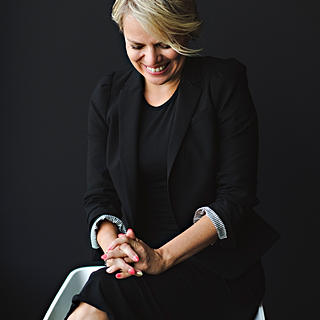
Some people learn to cook. Tina grew up inside it. Her childhood was shaped by women who baked without recipes, a great-grandmother who ran a bed and breakfast in Zagreb, and stories carried across borders by parents who survived the war. Food was memory, resourcefulness, and resilience all at once. It built her sense of home and shaped the simple, soulful way she cooks today.
When I first designed Tina’s cookbook 20 Family-Inspired Menus in 2011, I remember thinking her recipes felt like family stories you could hold in your hands. Sitting with her now, hearing the history behind each dish, only confirms how true that is.
In this conversation, Tina shares the stories behind her recipes, the memories that shaped her first cookbook, and the deep family roots behind the one she is writing now.
I love the story you’ve shared about your parents, your dad proposing twice in Austria, both times hearing no, and then immigration giving him a third chance that changed everything. As the child of immigrants who survived the war, you grew up surrounded by that courage and resilience. How has their journey influenced the way you see food and the way you approach recipe development and cooking?
Let me give you a bit of background on my family to set the stage. I come from a long line of culinary wizards! On Mom’s side, she was an amazing baker and a lightning-fast cook – even though she didn’t love cooking, baking was her true passion. Our Schab Oma (maternal grandmother) was a culinary genius. Everything she made was delicious, and she never used a recipe – not even for baking. Her sister, my Janka Tante, was an incredible cook who even did it professionally. Dad was a fantastic cook too, and his grandmother ran a bed & breakfast in Zagreb. As for my sister Audrey and me, we both love to cook and spend as much time as we can together in the kitchen creating. I’ve won several recipe contests and authored a few cookbooks. Cooking is in our DNA.
I started cooking young – maybe around seven – and my parents always encouraged me, as long as I ate what I made. When you grow up hearing stories of family members who went days without food and had to ration, you learn not to waste a thing and to make magic out of whatever’s in the fridge.
My recipes are simple – no fancy ingredients or complicated instructions. As first-generation Canadians, I can cook our Austro-Hungarian, Serbian, and Croatian dishes with my eyes closed. Our family was organic before organic was trendy, and we practiced farm-to-table long before it was cool.
As I’ve developed and adapted recipes over the years, it’s hard not to tie each one to a special memory – or feel my culinary heroes (family members) standing beside me as I cook. Our parents also taught Audrey and me to aim high and to never give up when we believe in something.
Every recipe you write carries a story alongside it. When you sit down to write, how do you move between memory and measurement, capturing both flavour and the story behind it?
For me, they’re two separate things. I’ve got a pretty great memory – my family and friends even call me “Ms. Google.” I don’t just remember what the food tasted like; I remember where it was served, when it was served, and who was there. Since I rarely follow recipes when I cook, writing them down takes a few tries. Most of the recipes in my cookbooks have been tested at least three or four times before they make the cut.
The story part kicks in when I write the preamble to each recipe. Before I published 20 Family-Inspired Menus, I read a book on writing and publishing cookbooks. The author emphasized how important it is to craft a preamble that draws the reader in. It’s got to make them want to cook the dish – and more importantly, eat it.
Turning family stories into recipes can’t always be easy. Was there one dish that felt especially hard to put into words, and what helped you bring it to life?
Yes, most definitely – and the recipe is Mom’s Tomato Sauce.
I was nine years old when my dad was nearly killed in a car accident. I still remember the police arriving at our house in the middle of the night to tell us what had happened. It was terrifying. After five long weeks in the hospital, my dad was finally coming home, and a family celebration was planned. That day was the first time my mom ever made spaghetti and meatballs – a recipe she got from her Italian friend.
When I decided to include the tomato sauce in 20 Family-Inspired Menus, it stirred up a lot of painful memories. But it also reminded me of how incredible my parents were, and how they faced yet another challenge with strength and courage. I’ve never searched for another tomato sauce to replace the one Mom made that day in 1966. It’s more than just a recipe – it’s a reminder of how lucky we were not to lose our father, and how food can hold the deepest kind of memory.
20 Family-Inspired Menus was a beautiful project with your sister. As you work on your new cookbook, how does collaboration show up for you now, whether with family, friends, or even the readers you imagine cooking from it?
Our dad planned to live to 106 – one year longer than his grandfather – so losing him two years ago at 96 was a shock. He was the definition of optimism. At 91, he renewed his passport for ten years. Yes, ten.
To help with the grieving, I began writing Memories From Our Parents’ Kitchen. It’s a 19-chapter book (three are done) that shares stories of our ancestors, our parents’ early years, and the adventures that shaped their lives. It also includes our family’s favourite recipes.
To build that list, we had a family meeting – Audrey, her husband Jack, sons Daniel and Jonathan, and my husband Don. We landed on about 70 recipes. Now the fun begins, since so many were learned by watching, tasting, and feel. Audrey and Jonathan (who also loves to cook and bake) will be testing, and I’m hoping to convince a few family and friends who helped with past books. And of course, Don, Daniel, and Jack will be our super tasters.
I am a collaborator at heart, and love engaging others. Varying perspectives, insights, ideas, talents, and views always make for a better outcome. It’s in the testing, tasting, and storytelling together that these recipes become more than just instructions – they become shared memories.
Has there been a response to one of your recipes or stories that surprised you, maybe someone connecting with it in a way you didn’t expect?
When I self-published 20 Family-Inspired Menus, a couple of things surprised me. I sold 1,500 books in six months – and people loved the stories that came with each menu. I wondered why my stories resonated, and I think it’s because they made readers feel like they were part of something meaningful. Maybe they felt more connected to me as an author.
Many recipes got rave reviews, but one moment stands out. A professor I’d see now and then at the University of Waterloo – where I worked for over 40 years – would always say (as if for the first time), “We love your Paprika Chicken with Roasted Red Pepper Sauce.” That recipe did exactly what it was meant to do. It tasted great, my idea worked, and it brought happiness to another person’s life.
As you shape your next cookbook, what sparks you most, discovering new recipes, revisiting family favourites, or uncovering fresh stories to tell?
Working on Memories From Our Parents’ Kitchen has stirred up so many emotions. Back in Grade 10, I did a family history project – which I still have – and now, with the help of AI, I’ve been able to find answers to questions I never thought to ask my parents. I’m learning more about our ancestors, and for the first time, I’m documenting our family’s favourite recipes.
I know it’s going to be a ton of work, but I believe my two nephews, Daniel and Jonathan (who I absolutely adore), will treasure having these delicious memories from their grandparents to hold onto. That alone makes it all worth it.
Bonus Question: If your younger self could flip through your cookbooks, stained, marked with notes, and clearly well-loved, what would she be most delighted to see?
She would be delighted to know that I actually wrote and self-published the 20 Family-Inspired Menus cookbook – and that I’ve sold over 3,500 copies.
When I was in Grade 4, my teacher told me, in front of the entire class, that I was stupid. I was shy, and with German as my first language, school was a real struggle. I never imagined I’d get into university, have an amazing career, and – on top of it all – write books that people want to buy.
I owe so much to my parents and my husband Don. They believed in me, supported me, and loved me through it all. My parents were – and Don still is – my biggest fans.
Tina’s process shows how recipes become vessels for belonging. The dish is important, but the story is the anchor. Her way of writing reminds us that food isn’t only about flavour. It is about care, memory, and the people who shaped us.
To find out more about Tina’s book check out her website: thetwosisterscookbook.com
This series grows through word of mouth and the creative people who nudge me toward the next conversation. If someone comes to mind whose creativity inspires you, send them my way.
Until next week, Christine


