

Big Ideas, Big Feelings, Big Visuals. Kendall Kent on creativity and connection
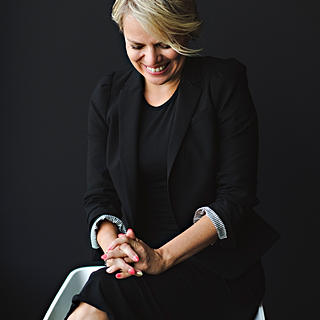
Some people spend years trying to tone themselves down. Kendall built an entire studio around refusing to do that.
As the founder of It’s Okay Studio, Kendall creates work that feels bold, emotionally honest, and deeply personal. Her approach is rooted in helping people lean further into what makes them different, rather than smoothing those edges away.
This interview explores identity, maximalism, boundaries, burnout, coffee rituals, and the surprisingly powerful experience of finally finding your people.
Kendall Kent design sample Kendall Kent design sample Kendall Kent design sample Kendall Kent design sample Kendall Kent design sample Kendall Kent website design
When did you realize your creative voice wasn’t going to be quiet or conventional?
I don’t think my voice has ever been very conventional. I’ve always been the person saying or doing things that felt slightly out of place, a bit weird, or not immediately relatable. Growing up, I found it difficult to find my people or even my footing, and I struggled to connect with more traditional hobbies or paths. I was always deeply drawn to the arts, which didn’t always feel like it fit into the environments I was in.
That’s part of why I moved to Etobicoke at a young age to attend an arts-focused school. I felt out of my element where I was and was actively searching for something that felt like a more natural fit. That ended up being the first place where I really felt at home—where friendships came easily and my “weirdness” wasn’t something to tone down, but something that was actually celebrated.
As I got older and became more comfortable with myself, I realized there are so many people who feel the same way—they just don’t always find each other easily. Once I started speaking directly to those people in my work, the ones who want to be unabashedly themselves instead of blending, everything seemed to start flourishing. That’s where I really started connecting with an audience that felt right.
Now, that’s exactly who I design for. I like to hone in on what makes people truly unique—their “special sauce”—and bring that forward in a way that feels seen and celebrated. I think my own lack of conventionality is part of my special sauce, so I’ve stopped trying to hide it. It’s actually the thing that connects me to the right people.
Your studio has a really clear point of view and voice. How did you figure out what you wanted It’s Okay to stand for?
This really came from the same feeling of being lost and not quite seeing myself reflected anywhere. I wanted It’s Okay Studio to exist for the people who feel like that—to be a kind of safe space for them.
To me, the world is better when there are more businesses rooted in love, intention, and genuine care for people and the planet. My studio is really about amplifying voices that are often underrepresented or overlooked—the “abnormals” in the best sense of the word.
I was honestly tired of seeing the same visual vibe, hearing about its correctness, and seeing the same types of businesses using it over and over again. So when someone reaches out and says, “I didn’t see anything that felt right until I found you,” that tells me everything and really gives me the warm fuzzies that I set out to create. It means what I’ve built is resonating with a very specific group of people, my people.
And even if that group is small, that’s enough. These are people with full hearts—people who want to put kindness, love, and creativity back into the world in whatever way they can. That’s who I want to collaborate with—my weirdo club. <3
A lot of your work is big, immersive, and full of personality. What helps you know when to push something further and when to pull it back?
A lot of this comes from how I grew up—my family are maximalists, and I definitely inherited that “more is more” instinct.
My process starts with research and education, then moves to experimentation and feeling out the visual direction. I’ll often push something quite far first, then step back and do a gut check to see how it feels. If it starts to feel overwhelming or anxiety-inducing, I’ll simplify from there.
I also tend to create both versions—one that’s more expressive and maximalist, and another that’s more refined and minimal. That way, clients have something to react to and can really guide me to what resonates with them. Typically, I find that the first two concepts are a starting point, and we collaborate to find a middle ground.
For me, it’s important that clients feel involved in the process. I want to guide things with expertise, but also give them autonomy and space to choose. That balance helps them feel grounded in the final outcome, while still trusting the creative direction and my experience.
You talk openly about values like honesty, boundaries, and work life balance. What have you had to learn or unlearn to build a business that actually supports that?
I always seem to come back to family, because that’s had a huge influence on who I am. I really do believe a lot of who we become comes from nurture—how we’re shaped early on.
I definitely inherited a strong work ethic, but also this idea that the more you push, the more you achieve, and the more successful you’ll be. That equation has taken a lot of unlearning. Even now, it’s still a challenge, because I can look at big wins and still feel the weight of what it cost behind the scenes—time, energy, personal life.
The events industry, where I started, also reinforces that “always on” mentality. Tight timelines, last-minute requests, constant urgency—it trains you to operate under pressure. I’ve learned that I can perform incredibly well in that mode, almost like I need pressure to fully activate. But I also know that too much space can sometimes lead me to overextend or over-focus on work at the expense of myself and my family.
I’m still actively learning how to balance that. I’m in my 30s, still figuring out scheduling, boundaries, and sustainability in my work. And now, with a baby on the way, that’s becoming even more important to define clearly.
A big part of this has been learning to communicate my needs directly, which doesn’t come naturally to me. But I’ve learned that growth often sits in discomfort. The more I practice it, the more freedom I actually gain.
I also try to lead with radical honesty—acknowledging that I’m a human in process. My clients are too. People get overwhelmed, overcommit, get sick, or just have hard seasons. I want to work with people who can extend that same humanity back. I don’t think that learning these things ever really stops.
You’ve worked with big brands but are shifting toward more small and local businesses. What’s behind that shift for you?
My career started in weddings and events, opening a stationery business back in 2011 while I was still in school. Over time, I grew alongside my sister’s events business, and am so lucky to have had someone who saw my capabilities and brought me along their journey. Working with her gave me the opportunity to collaborate with increasingly large corporate clients. I still do that work today in the events space.
So it’s not really a shift away from big work—it’s more of a balancing of it.
My focus on small and independent businesses came from wanting to balance that corporate experience with something more close and values-driven. I wanted to use what I’ve learned working at a larger scale and apply it to businesses that are intentional—people who aren’t just doing it for profit, but because they genuinely care about their community influence.
There’s something really hopeful about helping those businesses grow in a way that still feels like a partnership, while also contributing to something more positive socially and environmentally.
So now my studio is intentionally focused on smaller, alternative businesses, while larger projects still come in and help support the financial stability aspect. Some people might see that as unconventional, but for me it feels like a sustainable way to balance passion and practicality.
When your energy is scattered or you’ve got too many ideas moving at once, what helps you focus and follow something through?
Coffee definitely helps (LOL) —though I didn’t start drinking it until I was 28. Before that, I thought I hated it. Then I was at a convention, completely exhausted, tried it out of desperation, and immediately realized how much it helps me focus. Now coffee and coffee culture has become a ritual to me, I have one fancy latte in the morning, and it helps me get into a really strong window of hyper-focus.
I’ve also come to recognize that my brain just moves quickly. I have a lot of really BIG ideas, too many hobbies, and not enough time or structure to follow them through. So grounding myself is really important. I’ve found it really helpful having a partner who is grounded and logical. He helps me bring myself (kicking and screaming) back to earth so I can sit with ideas properly before acting. It keeps me more present.
One tool I’ve been using is asking myself, “what and why”—what am I doing, and why am I doing it. This is a tool that came from trying to teach my daughter focus and I found it helpful just to bring myself back into the moment.
I also work really well under pressure, which can be both a strength and a challenge. It means I can produce at a high level when needed, but I’m also learning not to rely on pressure as my only means to achieve.
Ultimately, it’s a balance. And I’m still learning how to maintain space for unpaid creativity alongside focusing on my paid work.
Bonus Question: What kind of project instantly gets a yes from you?
Any project where there's a values fit from the beginning. I need to feel like the person behind it is grounded, kind, and easy to connect with—someone that I can have a real, comfortable conversation with without any feeling of ick or putting on a 'business mask'.
I’ve learned to trust my gut a lot more when it comes to people. If someone feels genuinely like I could be friends with them, that matters just as much as the project itself.
I also get really excited when there’s creative potential that feels impactful—something brave, open, and willing to evolve through the process. I love working with people who trust me, but also have opinions and care deeply about what they represent.
If I feel like I’m being invited into something real—and I can fully buy into them as a person and a vision—then I’m absolutely on board.
There’s something compelling about the way Kendall talks about creativity and identity as intertwined things. Not branding as performance, but branding as recognition. The interview feels less like a conversation about aesthetics and more like a conversation about permission. Permission to stop sanding off the edges of yourself just to feel easier to understand.
To see more of Kendall work, check out her website: https://www.itsokaystudio.com/
This series grows through word of mouth and the creative people who nudge me toward the next conversation. If someone comes to mind whose creativity inspires you, send them my way.
Until next week, Christine


