Jessica Brabant on ergonomics, ritual, and the quiet craft of clay
A mug seems simple, until you really think about it.
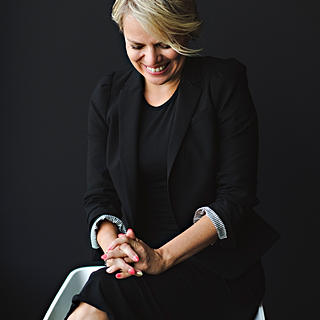
In this week’s 6Qs with Christine, potter Jessica Brabant shares what drew her into clay, why ergonomics always leads the conversation, and how the smallest details, balance, lip, handle, weight, can turn an everyday routine into something closer to ritual.
This is a conversation about patience, presence, and the quiet technical brilliance behind the objects we reach for every morning.
Jessica Brabant pottery Jessica Brabant pottery Jessica Brabant Jessica Brabant pottery Jessica Brabant Jessica Brabant pottery Jessica Brabant making pottery Jessica Brabant pottery Jessica Brabant pottery
When you were first getting to know clay, what moment made you think, “This is it. This is my material.”
I don’t think it was one single, dramatic moment, it was quieter than that. When I was first getting to know clay, what struck me was how physical and grounding it felt. The way it responds to touch, pressure, and patience. It forced me to slow down and be present in a way no other material had before.
At the same time, I was drawn to how challenging it is. Pottery is endlessly complex, full of variables, chemistry, timing, and unpredictability. There is always more to learn, more to refine, more to understand. The possibilities feel infinite, and that keeps me engaged and curious.
Your mugs have such a specific feel in the hand. When you are shaping a piece, what guides your decisions around form and weight and the way it should feel to hold.
Ergonomics always leads the conversation for me, function is just as important as form. There’s nothing worse than a beautiful mug that’s uncomfortable to hold. My goal is to make mugs that become your go-to in the morning. Beautiful, comfortable, practical, and durable. When all of that works together in harmony, it becomes less about drinking coffee and more about the experience, turning routine into ritual.
I think deeply about balance and weight so the mug feels grounded but never heavy. Handles are shaped with intention, changing with the size of the vessel and how the hand naturally wants to hold it. The lip is thin and comfortable to sip from—no drips running down the side onto the coffee table. The bottom is flat so it doesn’t trap water in the dishwasher. These details matter.
A great mug is far more technical than most people realize. It’s never just a mug. From small espresso cups to a 20oz stein, every proportion is considered so the piece feels intuitive in use. When a mug disappears in your hand and simply feels right, that’s when I know the design has done its job.
What is a challenge or turning point that changed the way you work in the studio, whether creatively, technically, or personally.
One of the biggest turning points for me has been realizing just how real the challenge of working alone can be. Creative self-employment is often romanticized as the dream job, and in many ways it is, but it can also be deeply solitary. During heavy production periods, when I’m not doing shows, the studio is quiet and the silence can feel loud. As an introvert, I never thought I’d say I miss aspects of a regular 9–5, especially the built-in social rhythm of it.
That realization changed the way I work personally and creatively. I’ve become much more intentional about building community, forming meaningful friendships with like-minded people, getting out into the local community, and opening my studio when I can. Hosting studio sales has become especially important to me. Seeing returning customers, meeting new ones, and having people wander through the studio or the gardens to see what’s been brewing brings a sense of connection that feeds the work in a very real way.
Another major turning point was simply starting. Stepping into pottery full-time was terrifying. I had abruptly changed career paths after realizing my previous work as a florist was no longer sustainable for me, and I jumped in headfirst after a six-plus-year hiatus from clay while we renovated our home. I had no clear plan, no certainty about what I wanted to make, whether I’d teach, do markets, wholesale, or something else entirely.
In many ways, I’m still figuring it out. But that uncertainty has taught me to trust my intuition and let the work evolve naturally. I’ve learned to follow what feels meaningful, intentional, and authentically me and that mindset has shaped not just how I work in the studio, but how I show up in my life as a maker.
Are there creative friendships or shared rituals that feed your practice.
First and foremost, I’m deeply aware of the unwavering support of my loved ones, my personal cheerleaders, who have encouraged me through every uncertain leap. Alongside that, I’ve been incredibly fortunate to cross paths with artists and mentors who have shaped not just my work, but the way I move through the world as an artist.
Creativity was part of my life from the very beginning. My grandfather was a watercolour artist, and some of my earliest memories are of drawing and painting alongside him. He hosted weekly watercolour classes at the church. Quiet, humble gatherings where people could either follow along with his landscape demonstrations or simply work on their own projects. He charged just two dollars a person, which he donated back to the church for use of their space. He didn’t do it for recognition, he did it because he loved painting and he loved sharing that joy with others. I even convinced him to come into my school art class once or twice as a guest teacher. I thought he was the coolest person in the world, and honestly, I still do.
In high school, my art teacher, Cathy Walsh, had an enormous influence on me. She offered such a wide range of materials and processes: watercolour, acrylic, mixed media, printmaking, sculpture, plaster and more, with no real limitations placed on our creativity. She encouraged exploration and risk-taking, and it was in her classroom that I first fell in love with working three-dimensionally. She always pushed me to try my best, to experiment, push the boundaries of art and to trust my instincts and that lesson has stayed with me.
More recently, when I began pottery full-time, I hit a very real hurdle: I didn’t have a functioning kiln. I reached out to a local potter, Cathy Francis, asking if I might use her kiln temporarily while mine was being set up. What she offered went far beyond that. She welcomed me into her studio, allowed me to come and go as needed, and generously shared her space. Almost three years passed, and I was still firing at her home studio. In that time, we shared countless conversations, stories, and rituals-her favourite being unloading glaze loads together to see how things turned out. Every firing felt like a little show-and-tell, swooning over new glaze tests, (problem-solving the ones that didn’t quite work) and on occasion, having a tea or sipping iced tea with limoncello gelato—her favourite summer treat.
It’s because of Cathy’s generosity that I was able to follow my dream of becoming a full-time potter. She passed away this year after her journey with cancer, and she is deeply missed. Her kiln now lives with me, and with every firing, I feel her presence. In many ways those shared moments, collaboration, and generosity continue to feed my practice. Reminding me that making has always been about more than the work itself.
Has a piece or process ever taken you somewhere you did not expect, either in the making or in how someone responded to it.
Yes, often, and sometimes in the most unexpected ways. Clay has a way of redirecting you if you’re willing to listen. There have been times when things simply didn’t happen as planned, firings gone wrong, processes interrupted, outcomes that couldn’t be reversed. Instead of seeing those moments as losses, I’ve learned to treat them as invitations to improvise.
One example that stands out is a batch of mugs that were accidentally fired to glaze temperature during a bisque firing. They were no longer suitable for their original purpose, but rather than writing them off, I reimagined them as bird feeders. What could have felt like a failure became a new life for the work. Functional in a different way, and unexpectedly joyful.
That mindset has reshaped how I approach making. Glazes shift, forms soften, surfaces surprise you, and what initially feels like a mistake often becomes a lesson in adaptability. Letting go of control and responding thoughtfully in those moments has been just as important as any technical skill I’ve learned.
What surprises me just as much is how people respond to the work once it leaves the studio. I’ve had customers tell me that a mug has become their mug. The one they reach for every morning, the one that lives on the counter, the one they hold onto when life feels a little heavy. I never expected something so simple to carry that kind of meaning. Those responses remind me that the work travels far beyond my intentions, becoming part of someone else's rituals and daily life, and that’s always more powerful than I anticipate.
When you feel a little stuck, what helps you reconnect with making. A place, a rhythm, a ritual, or something small that resets your creative energy.
When I feel a little stuck, I usually return to something simple and grounding. Often it’s a hike in the woods or sitting along the river’s edge, letting myself slow down, be present, and reconnect with nature. Stepping away from the studio routine helps me reset. I’m not trying to make anything in those moments, just to observe and let it all soak in. Those quiet pauses often spark new ideas for forms or glazes without me forcing them.
Other times, reconnecting with making means gently shaking things up. I’ll experiment with a form that isn’t part of my regular lineup, a side project that carries no pressure to be perfect or sellable. Learning a new technique or pushing myself into unfamiliar territory reminds me why I fell in love with clay in the first place. That balance between stillness and curiosity is usually what brings the work back into focus.
Bonus Question: What is something you are exploring in yourself right now as an artist, even if it has not shown up in your work yet.
Lately, I’ve been exploring what it means to make work that supports a slower, more intentional way of living. As an avid gardener and someone who leans toward a homesteading lifestyle, I’ve been thinking a lot about objects that naturally fit into that rhythm. Pieces that are meant to be used, shared, and lived with. Berry bowls, casserole dishes, and larger mixing bowls have been on my radar, and I’ve been refining ideas around scale, weight, and ergonomics so they feel as good in use as they do on the table.
Alongside that I’ve been reflecting on the objects we reach for when we gather, when family and friends are in the kitchen, food is being passed around the table. I’m interested in how pottery can contribute to that sense of togetherness and care, even in small, unspoken ways.
Colour has always been a key player, my work draws its colours from the subtle hues of Earth’s palette. Seaweed-covered shores along the East Coast, rustling autumn leaves, mist floating across the water on a brisk morning, and pine trees that stand tall. These landscapes linger in my memory and find their way into each piece. I’ve been playing around with some new glazes that will be taking the spotlight this year.
At the same time, there’s a more conceptual side of my practice I’m beginning to listen to. I’ve been imagining sculptural, textural pieces. Work that might live in the garden or an interior space, less about function and more about presence. It hasn’t fully surfaced in the work yet, but it feels like something quietly taking root, waiting for the right moment to grow.
What stayed with me from this conversation is how much care can live inside something ordinary. Jessica is shaping comfort, proportion, and ritual into clay, reminding us that the objects we use every day deserve thoughtfulness. A mug can hold more than coffee. It can hold a morning, a memory, a small sense of steadiness.
To see more of Jessica's work, check out her website: https://brabantdesignstudio.com
This series grows through word of mouth and the creative people who nudge me toward the next conversation. If someone comes to mind whose creativity inspires you, send them my way.
Until next week, Christine