

Kinga on painting, ritual, and visual memory
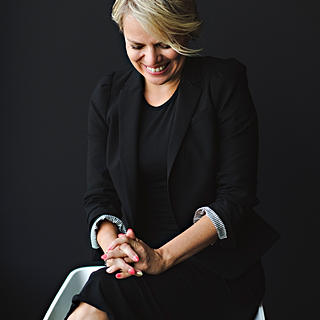
Kinga does not remember becoming an artist. She simply always was.
She grew up in Transylvania in a family where making things was part of daily life. Tailoring. Wood carving. Beading. A loom set up each winter. At four years old, she painted the same image over and over until something about it finally felt right.
Her work now sits between abstraction and recognition. Fruit. Vases. Plates. Shapes that feel familiar, layered over colour and movement that is more instinct than plan.
In this conversation, she reflects on ritual, looseness, and the quiet shift from making for others to making something that feels entirely her own.
Painting by Kinga Subject
When did you first start noticing that you saw the world visually, in a way
that made you want to make art from it?
I honestly can’t remember a time when I didn’t consider myself an artist. From a very young age, art was encouraged in my home, especially by my mom, who bought me my first art supplies and treated making things as something natural and important. I grew up in Transylvania, in a small city and spent a lot of time in an even smaller, tranquil town with dirt roads and horse-drawn carriages. Inspiration was everywhere, woven into daily life.
I was always happiest on my own, daydreaming, inventing stories, and turning them into
pictures. One of my earliest memories of painting is from when I was about four years old, after my mom brought home a small watercolour palette for me. I became completely obsessed with painting the same image, a basket of Easter eggs with a bunny, over and over until it felt exactly right. That sense of returning to an image until it matched what I felt inside has never really left me.
As a preteen and teenager, I would regularly “borrow” dishes, vases, and fruit from around the house to stage still life's in my bedroom and paint them. Looking back, I think my relationship with art is partly intrinsic, I can’t take full credit for it. Creativity ran deeply through my family. My mom is a trained tailor who can make a men’s suit from scratch, my dad was an accomplished wood carver, and both of my grandmothers were skilled artisanal makers. My maternal grandmother kept a loom set up in her living space every winter, weaving rugs and tapestries, while my paternal grandmother was one of the town’s go-to makers of traditional dress, known for her intricate hand-beaded work.
Because of that, I truly believe we’re all born with restless hands and some kind of creative urge, even those who insist they aren’t creative. In the right environment, with the right encouragement, that urge can blossom. At times, seeing the world so visually has felt almost like a curse though; I want to make all the art, in all the ways. I own two letterpresses, love photography just as much as painting, and illustrate on my iPad regularly. Narrowing my creative voice into one recognizable visual language has been one of the most challenging (and ongoing) parts of my artistic journey.
What did it feel like to see your work featured through Williams Sonoma, and how did that opportunity come about?
Having my work selected by Williams Sonoma felt deeply reassuring, like a quiet confirmation that I might be moving in the right direction with my visual language. Over the past decade, some of my packaging design and photography work has appeared in commercial spaces, but this felt different. This was personal.
As a graphic designer, I’m used to creating work that ultimately belongs to someone else, it serves a brand’s voice rather than my own. With a painting, there’s nowhere to hide. Seeing that kind of work selected for mass distribution meant putting something into the world that was entirely me. I felt incredibly honoured.
The opportunity came about through Minted, where I’ve been an artist for many years. In full transparency, I originally joined for somewhat selfish reasons. Minted hosts art and design challenges where the community votes on which pieces should be sold. I was curious to see how my work would be received by a large group of people who didn’t know me personally. It became a space where I could take risks, experiment, and share different facets of my artistic identity, ranging from painterly to abstract, without the filter of personal relationships.
Over time, I had several winning pieces in both photography and fine art challenges. Minted has a relationship with Williams Sonoma, and they curate artwork, particularly pieces centered around food, to license and sell through that collaboration. When my work was selected, it felt like a small validation for years of quiet exploration, risk-taking, and showing up with my art.
When you begin a new piece, what’s usually the first thing you’re responding to?
When I begin a new painting, the first thing I’m usually responding to is how I’m feeling, or
perhaps more accurately, how I want to be feeling, which is calm and relaxed. It might sound a little selfish, but making art is a selfish act for me, in the best possible way. While I often share my process publicly, which can make it seem outward-facing, the truth is that I paint because it makes me happy. It’s where I regulate, soften, and come back to myself.
I rarely start with a clear plan. If anything, I’ll flip through a sketchbook or make a few quick thumbnail drawings just to loosely suggest a composition and I always begin with a completely abstract underlayer. That first layer helps me loosen up and removes the pressure of the blank surface. I’ve learned over time that if I’m precious at the beginning, I won’t begin at all. Sometimes I’ll even write a frustration, a feeling, or a small mantra directly onto the surface before painting over it. Even though it disappears, it feels important, like setting an intention before the real conversation with the painting starts.
Your website mentions a new collection coming. What are you excited to explore in this next body of work?
Yes, I have a new collection of small to mid-sized paintings coming, and I’m working on several of them simultaneously, which I’m really enjoying. Right now, I’ve rolled out one large piece of canvas and I move freely between five paintings, with more planned. There’s something very satisfying about seeing them develop side by side, they begin to speak to one another, and the relationships between them feel organic and intuitive.
What I’m most excited to explore in this body of work is looseness. Working more in the
moment creates richer textures and less perfect shapes, and that’s where my voice feels the most alive. Looseness allows the work to breathe. I think that’s where an artist’s language, at least mine, develops most honestly.
Was there a moment when your style started to feel more like your own, not borrowed, not tentative, just yours?
That moment came when I began to combine abstraction with figurative elements in the same piece. It answered two competing needs I had: the desire to abstract, to play, to be loose and intuitive, and the equally strong pull to paint recognizable objects, fruits, vases, plates, everyday forms. At some point, I realized I didn’t have to choose. I could let both exist together.
That layering has since become essential to how I work, almost ritualistic. It gives me confidence when I face a blank canvas. I show up knowing how I begin, trusting the process, and saying, “This is me—let’s see what happens.” I’m especially excited to push this approach further in the next collection, exploring more layering and scale. I would love, someday, to paint a few really big pieces for some really big walls.
When you feel creatively tired or a little stuck, what helps you come back to making?
Oh I love a good documentary. Art documentaries specifically are some of the most reliable ways for me to get unstuck. Watching real, working artists, “for real life artists” as my youngest would say, talk about their work always makes me want to pick up a brush again. I think I’ve seen every Art21 documentary ( art21.org ), and I’ve probably watched the Amy Sillman episode, “To Abstract,” a few dozen times. I’ve also watched and rewatched all of Abstract: The Art of Design on Netflix and keep hoping they’ll release more so I can binge them again.
Anything that gives artists space to talk honestly about their process; the doubts, the rituals, the way they begin, feels deeply motivating to me. It’s a reminder that we all have such a deep and rich internal world to express, even when we feel like we have nothing much to say.
There’s something about writing something down just to paint over it.
It’s something I’ve done too, especially in commissions. A quiet layer that no one else sees, but that still shapes the piece. A bit of a secret you carry into the work.
Not everything meaningful needs to be visible to matter.
You can see more of Kinga’s work here: https://www.kingasubject.com/
This series grows through word of mouth and the creative people who nudge me toward the next conversation. If someone comes to mind whose creativity inspires you, send them my way.
Until next week, Christine


