

People Want to Be Seen with Alex Kinsella
- cgoucher
- Aug 31
- 5 min read
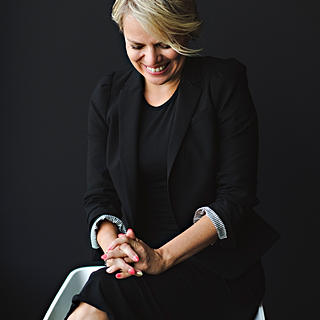
Alex interviews close to 75 people a year, and he says the ones that stay with him aren’t the polished ones. They’re the ones where he didn’t want the conversation to end.
Photo take by Alex Kinsella Photo take by Alex Kinsella Photo take by Alex Kinsella Photo take by Alex Kinsella Photo take by Alex Kinsella Photo take by Alex Kinsella
You’ve written about startups, local businesses, artists, community leaders, and everything in between. Looking back, what do your favourite stories all have in common?
I interview around 75 people a year, which is nuts when I type it out. I can’t remember every story, but the ones that do stand out to me are the interviews where I didn’t want the conversation to end. For most interviews, I’m meeting the subject for the first time. It’s a few minutes of small talk and then, “please tell me these personal details about your life and how it led you to what you’re doing today.” You have to create intimacy while building trust, and do it fast. Every so often I have an interview where everything clicks. It feels like the subject and I have known each other for years. They are fantastic conversations that end up being great stories. The problem for me is the article length. I don’t have the room to put everything in that I’d want to. It makes me want to do “director’s cut” versions.
You tell stories with both words and photographs. How do you know when a story needs one, the other, or both?
Every story needs a photograph. I grew up reading magazines like Rolling Stone, SPIN, Time, and Entertainment Weekly. The photographs that went along with the stories always set the stage or the tone for what you were about to read. In my work today, it’s the client that makes the call. There are stories I’ve done where a client uses a stock photo and we could have done something better. There are stories where the client uses another photographer and I’ll write it knowing they’re telling part of the story with their work. I wrote a story about Jim Parrott, who retired as the executive director at SPECTRUM and was a founding member of The Glow Centre for Sexual and Gender Diversity at the University of Waterloo. It was that kind of interview where we could have talked for hours. Then I saw it published with a photograph by Hilary Gauld. Her portrait changed the whole story for me.
Reading your work, I got the sense that you’re just as interested in people as you are in the story. Has curiosity always come naturally to you?
Honestly, no. Being curious is something that I developed while working my first job in tech. The company made software for beer and soda distributors, and I would fly across the U.S. to install the software and train people how to use it. Most projects were under seven days, and I had to go in and quickly build trust with people who, nine times out of ten, had no interest in changing how they did their jobs. The only way to build that trust is to understand not only their work, but why they do it, what brought them to it, what keeps them there. Those experiences taught me a new level of empathy that’s driven by being curious and asking questions. It was the best job I ever had. Changed my life. I’ve taken those lessons through every role I’ve had and into the freelance work I’ve done over the last seven years.
I imagine you’ve walked away from more than a few interviews thinking, “I wasn’t expecting that.” Which conversation has stayed with you the longest, and why?
Vint Cerf. Calling him an internet pioneer is putting it mildly. He is one of the two developers of the TCP/IP protocol that the internet is built on. Cerf is the Chief Internet Evangelist at Google and he came to the University of Waterloo to give a lecture at the Humanities Theatre. I covered the talk for BetaKit and somehow was given 15 minutes for a one-on-one interview. He was so gracious with his time and answers. I got him reminiscing about the pre-world wide web era when I shared how I used to use telnet to connect back to a server at university when I was working a co-op term out of country. He gave me his business card and asked me to send him the article when it was out. I did, and he wrote me back thanking me for my time.
You’ve spent years telling Waterloo Region’s stories through your writing, photography, and TL;WR. After all that time, what still catches your attention?
For writing, it’s local business owners. I don’t want to say “small business” because that takes away from what they’re doing. Investing your time, money, and life into building something isn’t small. It’s a massive undertaking. Ajoa from Four All Ice Cream, Jason and Jim from J&J Cards and Collectibles, Lenoren from LenJo Bakes—there are so many neighbours who have built businesses that make our community what it is. I love hearing and sharing their stories. For photography, it’s sports. I’ve had the chance to photograph everything from the Kitchener Rangers and KW TItans to KCI Girls Rugby (Raiders vs. Everyone) and Kitchener Lady Rangers hockey. I have such a respect for the dedication, energy, and skill these athletes bring to the game.
You’ve asked a lot of questions over the years. Is there one you keep coming back to because it always seems to reveal something interesting?
I was interviewing two guys from MDA Space who are working on Canadarm3. It’s the next version of Canadarm that will be part of NASA’s return to the Moon. Towards the end of our time, I asked them if they ever thought about how cool it was that they’re building something that’s going into space. They paused for a bit. It was a little awkward. Then one of them replied, “No one has ever asked me that before. Yeah. Yeah, it’s super cool. I’m psyched all the time.” We ended up talking for another 15 minutes. What came after that question was the best part of the interview. People want to be seen. They want to be appreciated. Now, I always look for a way to ask people how they feel about what they’re doing. It opens up a deeper conversation.
Bonus Question: Whose story in Waterloo Region is still waiting to be told?
That’s the blessing and the curse—there are too many stories to tell. There are people who have been here for generations. There are First Nations, Inuit, and Métis people whose stories were erased and need to be retold. There are newcomers to Canada who are writing the next chapter of their stories. Each of these not only tells us who we are, but who we could be. The more we learn about each other, the more truth we know, the more connected we become. It’s the only way to build a better future.
There’s something generous about how Alex talks about the people he interviews, treating a fifteen-minute conversation with an internet pioneer with the same care as a story about a neighbourhood ice cream shop. Underneath all six answers is the same idea: people want to be seen, and the smallest question, asked sincerely, is usually what gets them there.
Want to know more? Check out his website: https://www.kinsellamarketing.ca/
This series grows through word of mouth and the creative people who nudge me toward the next conversation. If someone comes to mind whose creativity inspires you, send them my way.
See you next week, Christine


