

The Spark of Curiosity with Elfie Kalfakis
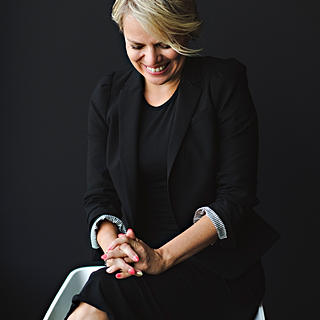
Eleftheria (Elfie) Kalfakis brings together design, writing, and teaching with curiosity and care. In this interview, she reflects on the sparks, challenges, and surprises that shape her creative life.
Portrait of Elfie in front of colourful wall Magazine layout featuring Elfie Kalfakis Surprise is often the best part of the process — it reminds you that creativity has its own rhythm.
When did you first realize that making art could be a way to heal, for yourself and for others?
I think I’ve always used art as a way of healing, even before I realized that’s what I was doing. The first poem I ever wrote was when I was 11, after my grandfather died. From then on, art became my safe space to play, to process, and to explore feelings I didn’t always know how to express.
As someone who’s lived with mental illness my whole life, creativity gave me a place to exist without judgment. Over time, as I grew into adulthood and learned more about myself and other creative practices, art became a sacred space where I could take apart complex emotions and transform them into something I could understand, or sit with or admire.
Turning something raw, painful, or difficult to talk about into something that can be interpreted, or simply witnessed, without needing to over-explain, has been my way of battling and healing my demons. Eventually, it felt natural to share this process with others. As I became more confident in my ability to transmute my trauma into artwork, I also found joy in offering that same space of healing and possibility to others.
Your Originally Received Broadcasts zine feels so immediate and unfiltered. What’s it like to create from intuition, almost like channelling, letting the work come through without polish, almost as if it has its own kind of magic?
I would say it’s a pretty intense experience. When I get into a focused trance, it doesn’t feel like I’m the one drawing. Other artists might call it “the zone” or “flow,” but for me, it’s deeply connected to my spiritual life.
Growing up in a strict Greek-Orthodox tradition that instilled a ‘fear of God’ so to speak, which made me afraid of trusting my own intuition or exploring non-physical realms. That began to shift as I worked with different spiritual teachers and through my own exploration, where I learned that my art could connect to something beyond the physical. One teacher even called my pieces “portals.” I realized that when I stopped worrying about the outcome and simply listened (whether to my body or to whatever message wanted to come through) the drawings transformed. The lines, images, even the words carried a different energy.
That process taught me that my ego, or conscious self, isn’t always the most reliable guide. Allowing myself to become more of a vessel for the divine or the collective unconscious opened up my practice. It pushed me toward valuing process over product, experimenting with new media, and letting the work shape itself. I still refine pieces, but often the raw, unfiltered versions hold the most clarity and power.
My newest publication, Originally Received Broadcasts, which I hope will evolve into a series, brings together these raw pieces, each in different forms and media.
You move between teaching, public art, street art, workshops, and your own practice. What’s the hardest part of shifting between all those worlds, and how do you keep your creative flow and sense of mysticism alive?
I think existing in a way where you’re constantly receiving cues from the collective, or tapping into something outside the physical world, can be challenging for anyone. Ask someone who’s highly empathic or neurodivergent, and they may tell you the same thing. For me, teaching is part of my creative practice in the same way spirituality is, so moving between different modes of creating has become a way of navigating a kind of liminal space.
The physical world, as we usually define it, is really just a small part of our existence. Many of my mental health struggles have been rooted in this tension. Being drawn to create, explore, and listen to the non-physical world while also living in systems that ask us to suppress or dismiss those experiences was hard. For years, in school and professional settings, I masked that part of myself just to fit in.
But as my creative practice grew, I realized that connection to the unseen was actually the most real thing for me. Everything else felt like a diluted version of existence. The challenges came when I kept trying to force myself into a mold that didn’t fit. Over time, as I rooted myself more deeply in my creative and spiritual practice, I found it easier to move in and out of the so-called “real world” spaces. Leaning into creativity became a form of grounding, and from there, life became not only easier, but far more colourful.
You’ve collaborated widely, from co-founding ArtCave to working with collectives and community projects. What does collaboration give you that working alone cannot, and how do you keep your personal, magical approach intact when working with others?
Collaboration, in my opinion, is one of the highest levels of magic! When I create, even on my own, I feel like I’m co-creating with something beyond myself. So, bringing other people into that process feels very natural. Surrender is central to both: whether I’m channelling divine or otherworldly energy alone, or working with others, it’s about letting go of ego and trusting the process.
Of course, it’s not always smooth, but when everyone involved finds a flow, the outcome can be incredibly beautiful. The key is standing in your truth and knowing what you’re willing to compromise on and what you’re not. Valuing what others bring to the table, while also feeling valued for your own contributions, creates a balance that strengthens your convictions and opens you up to new ways of working. I’ve been lucky enough to work with people who appreciate how I work creatively.
Collaboration has taught me that effective, respectful communication is everything. Disagreements will happen, but leaning into them in healthy ways can actually make the project stronger. It’s always a work in progress. I don’t always get it right, but in the right circles and partnerships, collaboration leads to some of the most layered, complex, and magical outcomes.
Your art often dives into raw themes like trauma, mysticism, and mental health, and you share it openly in public spaces. What helps you feel grounded enough to let people into that very personal, almost sacred side of your creativity?
It hasn’t always been easy, and I still have moments of self-doubt like any artist. But what grounds me is remembering that my process, my experience, and my voice are my own. How others receive my work is not the reason I create. I make art to heal, to process, and to connect. Not everyone is going to like or even understand my work, and that’s okay.
I’ve spent years developing a practice that helps me heal, and that in itself makes the work worthwhile. Of course, I love when a piece resonates with others, but even if it doesn’t, I would still make it. To me, that’s how many of the artists I admire also operate. My process is rooted in the belief that every perspective is valid, and that our individual experiences are worth expressing.
If my work brings someone comfort, that’s beautiful. If it makes someone uncomfortable, that can be valuable too. If a person feels discomfort at me expressing something deeply personal, that’s not really my problem. I think it’s an invitation for them to reflect. And if there’s one thing I’ve learned, both through therapy and creativity, it’s that leaning into discomfort often reveals something important about ourselves. That part is their work, not mine.
When someone encounters your work, whether it is a zine, a street piece, or a drawing, what do you hope it stirs up in them? Do you want them to feel a spark of the same magic you bring into making it?
The main reason I share my work is to spark dialogue. If it brings someone comfort, that’s wonderful. If it makes them uncomfortable, even better. I believe in chance and that nothing is coincidence, so if you come across my work, I like to think it was meant to find you.
For me, art is an alchemical process. At its best, it changes you. So if you find my work, let it move you, that would be ideal. Or ignore it, because I can’t force anyone to feel anything (haha). But yes, by sharing my work I am inviting some kind of shift, whether that comes through comfort or discomfort. That transformation, that alchemy, is magic. Whether it happens for one person or one million, that part is up to the universe.
Bonus: What’s something purely fun or playful that you love to do, the kind of thing that feels like your own little spell for joy?
Usually, to get myself into flow, I like to dance. I’ll have a solo dance party in my studio before I create. I’ll put my headphones on, move until I work up a sweat, and raise my vibration so I can start from a pure place. It’s become a ritual. I’ll burn words or phrases in my cauldron, light candles and herbs, and create an atmosphere that feels charged and alive.
Those moments before working are really sacred to me, so I let myself get a little unhinged, sometimes even putting on costumes or anything that helps me slip into the playful, high-energy state I need. That mix of movement, ritual, and joy feels like my own spell to enter creative flow.
This series grows through word of mouth and the creative people who nudge me toward the next conversation. If you know someone with a story worth sharing, I’d love to hear about them.
If something here made you smile, pause, or think, share it. Tag a friend. Leave a note. I read every one, and you never know whose story might show up next.


