

This Feels Like Us: Meg Thompson on Brand Storytelling
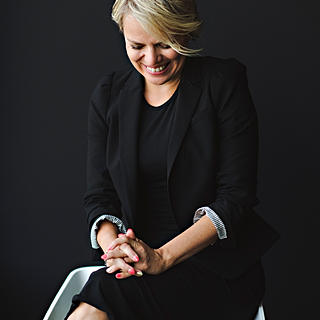
Meg Thompson’s work spans strategy, photography, writing, branding, and even a children’s book. This week she talks about what all of it has in common.”
Meg Thompson Meg Thompson's photography Meg Thompson's photography Meg Thompson's photography Meg Thompson's photography Meg Thompson's photography
Your work spans strategy, photography, writing, branding, and even a children’s book. Was there a moment when you realized storytelling was the thread connecting everything you wanted to create?
As a kid, if you’d asked me what I wanted to be when I grew up, I would literally answer “Robert Munsch.” I just loved the idea of telling stories and making people feel something.
As I got older, I set my sights on journalism. In journalism school, I fell completely in love with telling stories through photography. I still loved writing, but the industry felt a little too ruthless for me at the time (to be fair, that was before I fully understood the breadth of journalism). So I pivoted into corporate communications, kept up photography on the side, and over time, that naturally evolved into marketing and brand strategy.
For a long time, I thought my path was a bit windy… a bit unfocused. The lightbulb moment hit when I was putting my website together and realized that every single thing I offer comes back to the exact same goal: helping people feel comfortable enough to be their authentic selves, and capturing their story so others can understand who they are.
Some stories need words, some need photographs, and some need strategy. How do you know which creative tool a story is asking for?
Truthfully, a lot of the time, the client decides before they even reach out! People often see me through a single lens: as just a photographer, just a strategist, or just a writer. So I’m frequently brought in to execute a very specific ask. And honestly? Sometimes I just do the job I was hired to do.
But when there’s room to guide the process, I look at what the story is actually trying to accomplish. Strategy is for structure when a project lacks direction. Words are for clarity when an idea is complex. Photography is for feeling when you need an immediate, human connection. Even on single-discipline jobs, knowing how all those pieces fit together behind the scenes helps me deliver better work, whether I'm holding a camera or writing copy.
Helping people tell authentic stories often means asking them to be vulnerable. How do you create a space where people feel comfortable enough to be themselves?
By taking off the pressure to perform. So many people show up trying to fit a mold rather than celebrating who they are.
In photography, that means capturing real life over perfection—like the battered toy your kid refuses to put down, because that’s the memory that matters. In business, it’s the same: projecting a fake persona creates friction, while embracing your true identity builds instant trust.
When people realize they don’t have to perform for me, they relax. That’s when the authentic story happens.
Looking back, what’s the most memorable piece of feedback you’ve ever received from a client?
“I look like myself.” Or, “This feels like us.”
Whether it’s a family seeing their photos for the first time or a client reading through their finished brand strategy, that’s always the ultimate compliment for me. I don’t want to package someone into a template or make them fit a trend.
When a client looks at the work and sees a true, clear reflection of who they are, I know I can be proud of the job I’ve done.
I also take quiet pleasure every time someone sheds a tear reading Everything Will Change. Knowing that it resonates with other parents never gets old or goes unnoticed.
Over the course of your creative career, is there something youve completely changed your mind about?
On a practical level? Canva and QR codes. I used to be a total snob about both, and now I use QR codes constantly and build Canva templates to empower my clients.
But on a deeper level, I’ve completely changed my mind about “community over competition.” Early on, I honestly didn't think it was real. It felt like a nice buzzphrase people used on social media.
But working as a freelancer in Waterloo Region, I’ve been blown away by how people here actually show up for one another. People doing the exact same work will sit down together, share tips, and gladly pass along jobs they can’t accommodate. There’s a genuine culture of collaboration, and if you try to operate with a scarcity mindset instead, people feel it.
What are you most curious about right now?
How to stay open to new tools without losing our creative soul.
Most of the raw AI design and copy floating around right now is generic and tacky. It’s missing taste, strategy, and lived human experience. But I do think there’s a smart way to use it behind the scenes to speed up workflows and brainstorm without turning into a creative press-release generator. I’m curious about where that line is: embracing technology to be more efficient, while keeping humans firmly at the center of the work.
Bonus Question: I couldn’t resist asking about Everything Will Change. Having designed several books myself, I know they’re no small undertaking. What was it like bringing that story to life with illustrator Brie Pointer (who I absolutely adore, by the way)... and should we be keeping our fingers crossed for another book someday?
Brie is magic! I wrote Everything Will Change in a notebook right after my son was born, and Brie brought those words to life so beautifully with her illustrations.
Self-publishing that first book was an incredible experience, but it was also a ton of heavy lifting, from production to distribution on top of client work and family life. That said, the community support was so overwhelming that it proved to me it was worth every bit of effort.
I’ve got new stories brewing that I’m excited to bring to life next (hopefully with a traditional publishing partner to share the load this time around!) Not quite Robert Munsch level, but I think kid me would be pretty proud.
Meg’s approach comes down to taking the pressure to perform off the people she works with. Whether she’s behind a camera or building a brand strategy, she’s looking for the moment someone stops performing and just shows up as themselves. That’s when the real story, and the real trust, happens.
For a closer look at Meg's work check out her website: https://www.megpie.ca/
This series works because people keep pointing me toward the next great conversation. If someone’s creativity has been inspiring you lately, tell me who they are. I’d love to talk to them next.
Until next week, Christine


