

What Happens Behind the Scenes of a Rebrand. Yves Lepage on trust, brand leadership, and staying human in a changing field
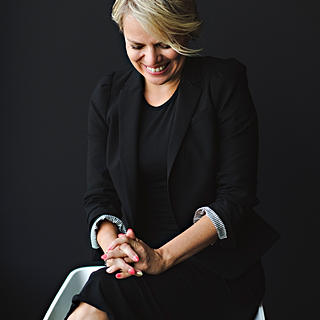
Yves has spent a career shaping brands, building creative teams, and mentoring designers with a steady mix of rigour and heart.
In this week’s 6Qs with Christine, Yves shares the early obsessions that pulled him toward design, from photographing still life scenes at home to studying record sleeves like sacred texts. We talk about creative leadership, why exploration matters, what trust really looks like in collaboration, and the massive rebrand work that stays with you long after launch.
It’s a conversation about making space for people to do their best work, and holding onto real art in an era that’s shifting fast.
Artwork by Yves Lepage Design by Yves Lepage Photography by Yves Lepage Yves Lepage
You’re the former Director of Brand and Creative Services at Magnet Forensics, and I know you’ve shaped brand strategy across a range of industries. But let’s rewind a little. What first drew you into design and creativity? Was there a moment when you realized this was your path?
Ever since I can remember, I liked to draw. I admired visual things. Even something as basic as the details of a toy car fascinated me. When I was younger, I would set up objects that I liked and photograph them at home with my film cameras. Things like tennis shoes, a racket, and tennis balls. Records too–with the sleeve and vinyl out. I can’t say I know why. It seems so long ago, but if I had to guess, I treated it almost like you would a still-life study. I liked curating items and arranging them in such a way–almost like I was setting the scene for something. In my early teens, I developed an even bigger love for music. Records, cassettes, then CDs, and now back to vinyl. Back then, my walkman and headphones were necessities. I spent so much time listening, but also looking at the art and reading every word on the sleeves. Even then I thought that designing record covers for a living would be the coolest job. Vaughan Oliver and David Carson were my idols in that sense. Fast forward, after one year in university studying to be an accountant, and realizing that I only liked Economics and not much else from that course, I spoke to my sister who encouraged me to follow my passion. So I abandoned the idea of number crunching for a living and made the move to study visual arts with a focus on design and photography.
You’ve spent years building creative teams and mentoring designers, including serving as a judge for the RGD Student Awards. What have those experiences taught you about creative potential, both your own and in others?
Good question. And thanks for the reminder—I really enjoyed reviewing all of the work submitted by designers for RGD. When I was in school, I wanted to rush to the finished product, but my design teacher made always made us show our preliminary work. I see why now—working on my own or in a team, and going through those early roughs is always interesting and so critical. As a leader, I prefer not to be too prescriptive at the beginning, to not stifle creativity, but also give the designers some freedom to explore. Often times they’ll come up with fresh ideas that maybe we wouldn’t have finished with. Design isn’t like any other job—there has to be time for exploration and ideation and fun. I want to encourage designers to do just that so that they can grow and feel good about what they do.
I feel fortunate to have had the roles and experiences I’ve had throughout my career. For example, I don’t think I would have known my full potential if I wouldn’t have spent years art directing photoshoots at RIM/BlackBerry. Working with talented professionals taught me so much about the art of photography, management, and everything that goes on behind that scenes that leads to those final shots.
I’m no stranger to the challenges in the field of brand and design, be them internal or external, but still I wouldn’t want to be in any other type of work …except for maybe something involving food and coffee … or magazines … or music.
Collaboration plays a huge role in branding work. What’s something you’ve learned about working with teams or clients that continues to shape how you approach projects?
I’ve been in-house in my last three roles, and have never been agency-side. That said, I’ve managed many projects with small to big budgets with external creative agencies, and most of those have been pleasant. It’s definitely not for the faint of heart. Whether it’s brand work or photo/video shoots, the relationship itself and the final product matter so much to me personally. What I’ve learned over the years working with so many different types of creatives—from copywriters to muralists to illustrators—is that when you work with someone good, give them the brief and then get out of the way. So much creative work and collaboration comes down to trust and creating spaces for people to be vulnerable, to wrestle with the task, and deliver something all can be proud of.
I’ve been extremely lucky with this last role, where I was able to hand-pick my team. Choosing someone not just on talent but also cultural fit is so important. It has to work for them as much as it does for the hiring manager and company. I truly lucked out, as they’ve all been excellent to work with, and I will definitely miss that.
Can you tell me about a project that really stuck with you? Maybe one that surprised you, challenged you, or just felt deeply satisfying?
There are many, but my last massive project was the rebranding of Magnet Forensics, post-merger with Grayshift. I was lucky to work with a great boutique agency from Brooklyn with a creative lead who I had been speaking to for several years, but had never worked with, or even met in person. The timelines were more than aggressive, if not impossible, but that didn’t stop us from delivering a vast amount of assets on time. New logo, colours, fonts, website, photography, tradeshow booths, banners, digital ads, swag items—you name it, we had it and more. Between my work with the agency, meetings with leadership, and the support of my team and a couple of freelancers, we worked non-stop on this for several months. It was extremely exhausting but also very fulfilling. Many times during the process, I was met with challenges where I felt so strongly about something that I had to really push to be understood, and ensure that we didn’t compromise on things that I felt couldn’t be any other way. I’ll always look back on that work with great pride and satisfaction.
When creative energy runs low (we’ve all been there), how do you reset or refocus? That’s a tough one. So many times, designers or brand teams are so swamped with work that they just put the auto-pilot on and pump out work that doesn’t really require too much creative juice. I’ve fallen victim to that myself. But it’s so important to have time to think, to get energized—whether it’s browsing magazines, putting on some music, or walking my dog. Sometimes the most mundane things bring about inspiration.
As a visual person, I like new experiences, new environments, new products, etc. I find that can spark some creativity. Travel, seeking out new coffee shops, visiting familiar record stores, going to concerts, watercolour painting, or seeking out new photography spots are all things that help me. I have various Instagram accounts—one for personal life, one for my music interests, and another for my car photos. Those accounts give me space to explore different sides of my own creativity. Remembering and making time for this sort of thing isn’t always easy. We all lead busy lives and sometimes the motivation to do anything I mentioned above outside of work hours starts to wane. Just recently, I felt that I had to step back to refocus, and decided to take some time to figure out what’s next.
What’s something you’re curious about or excited by right now, in your work, your life, or both?
I’m excited to see what the future has in store. I’m looking for something different and want to give myself some time to focus on that and enjoy the process.
I am still curious about the changes happening in the field with AI. If it can enhance some of the work, and help people achieve some balance, then great. I don’t want to lose real art, true photos, authentic music, made by creative humans. I’m hoping the pendulum swings back and we see society place more value on artists and craftspeople. Things have a way of coming full circle in that respect.
I have some interests that are dear to me which I’ve mentioned above, and hope to incorporate them in whatever I chose to do next. But right now, I’m okay focusing on family and weighing my options.
Bonus Question: What’s something you’re surprisingly good at that has nothing to do with work, or maybe everything to do with it?
I think I’m a pretty good photographer. It’s the one hobby that has stuck with me since childhood. I’d say I’m a good cook too, often exploring new recipes, and some household classics like chicken adobo, or even baking madeleines. I also take a lot of joy from the arts in many forms, and like to teach and mentor whenever the opportunity arises.
Although I’m an introvert, I think I’m good at connecting with people in ways that others may shy away from. I often reach out to other creatives on social media (artists, designers, musicians, movie directors, etc.), or meet people from car rally road trips courtesy of my Polestar Instagram account. I’ve got an eclectic group of friends and acquaintances and enjoy spending time with them.
Speaking of which, if anyone out there who knows me reads this, don’t be afraid to let me know and say hey.
What I loved about Yves’s answers is how much care sits underneath the leadership language. He’s talking about brands, budgets, and timelines, but what keeps surfacing is trust, curiosity, and the desire to make space for real creative humans.
In a moment when so much feels automated or accelerated, his perspective is a reminder that good work still comes from attention, taste, and people who are allowed to explore.
This series grows through word of mouth and the creative people who nudge me toward the next conversation. If someone comes to mind whose creativity inspires you, send them my way.
Until next week, Christine


