

What the Hands Know: Karen Louise Fletcher Art and the Shape of Making
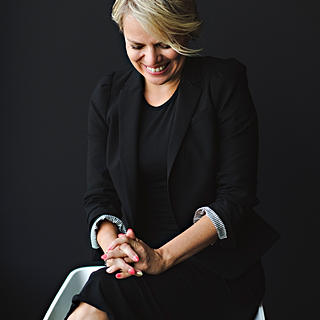
Karen and I talked in person on a calm afternoon in Waterloo. She’s the kind of artist who doesn’t separate life from making, and you feel that as soon as she starts speaking. Our conversation moved from clay to printmaking to the landscapes of Keels and St. John’s that continue to shape her hands and her attention. It was an easy, open conversation that offered a clear sense of how Karen Louise Fletcher art continues to grow from observation, touch, and the places she returns to.
Artwork by Karen Louise Fletcher Artwork by Karen Louise Fletcher Sculpture by Karen Louise Fletcher Self portrait of Artwork by Karen Louise Fletcher Newfoundland coast Artwork by Karen Louise Fletcher Artwork by Karen Louise Fletcher Artwork by Karen Louise Fletcher Sculpture by Karen Louise Fletcher Sculpture by Karen Louise Fletcher Artwork by Karen Louise Fletcher Artwork by Karen Louise Fletcher
What first drew you toward working in three dimensions, and what keeps you exploring it?
Karen smiles as she says she’s “one of the few artists who doesn’t paint.” Though she’s had a painting exhibition, most of her creative life has been in drawing, printmaking, and working with clay.
Her move into sculpture was almost accidental. After her son was born, she went back to school for a teaching certificate and heard about an opening for someone to teach three-dimensional art.
She admits she “never had much love for clay back in high school” yet took the job and learned along with her students. That decision changed everything. “When you teach, you get these bits of clay that aren’t good for anything,” she says. “I’d take them home and start playing.”
What began as small pinch pots on the beach with her kids grew into a lifelong exploration of form, texture, and touch. “I think three-dimensionally,” she says. “I don’t think in colour. I think in values when I draw and how it feels when I work three dimensionally.”
What is it about Keels, Newfoundland, the land, the water, and the objects you collect that inspires your work?
Keels, she explains, “feeds me.” The things I find along the coast and when I walk the hills are a continuous source of inspiration. Her home sits on a UNESCO geological site known for formations locals call “devil’s footprints.” Karen drew them obsessively, fascinated by their humanoid form. “They look like bellybuttons, or bones. They’re rock, but they feel alive.”
Her studios are filled with remnants of that landscape: whale bones, animal skulls, sea urchins, seaweed and bits of stone.
“I felt a real loss when the animals disappeared from the land,” she says, describing how goats, sheep, and horses once roamed freely through the town. “So, I started drawing the bones, small tributes to a way of life that was disappearing.”
The seaweed series began the same way, as drawings that resembled forms of the body. “People said, that’s not really seaweed, is it? And they were right.”
What draws you to the human form, and how has your approach evolved?
“I’ve always worked with the figure,” she says. From early drawings at 40 King Street Studios in Waterloo to Renaissance-inspired portrait sculptures, the body remains her central focus.
Her process evolved through life drawing. Karen began sculpting directly from live models using leftover clay. “It was fast, one minute, five minutes, half an hour poses at the most.” Those quick studies eventually became exhibitions. “They were never meant for that. They were just meant for the doing of.”
She learned to construct large heads using mathematical systems from Piero della Francesca, creating front and side views measured with callipers and enlarged onto clay. “You can’t get far enough away from something that big,” she says with a small smile. “Those drawings kept me honest.”
What do you find most revealing about the relationship between artist and model?
For Karen, it is about connection. “When I work three-dimensionally, I’m not thinking,” she says. “I work with both hands at once, and my eyes go straight across to the model. I’m not looking down, I’m feeling it.” She describes it as touch translated into form, the wall between artist and subject dissolving.
In group life drawing sessions, there is silence and focus. In private sculpting sessions, conversation shapes the rhythm. “It’s about trust,” she says. “About seeing the person, not just the body.” Her sculptures of male models capture gestures she noticed most often, a tilt of the chin, a natural stance, while her female figures are calm, symmetrical, and meditative, each with a small fossil embedded in the back of the head. “Don’t ask me why,” she smiles. “They just are.”
Has a piece or process ever taken you somewhere unexpected?
“Absolutely,” she says. “Those little life-drawing clay studies were never supposed to be anything.” When the Clay and Glass Gallery offered her a show, she hesitated, calling them “just exercises.” Yet the exhibition travelled, expanding into larger works and unexpected sales. “People responded because they were immediate. You could feel the energy still in them.”
She smiles about how viewers can find their own meanings. One early drawing from the 1970s sparked a comment from another artist who said, “Why’d you give yourself a penis?” “I hadn’t,” she says, smiling. “But it made me realize people see what they need to see. The unconscious comes out when you’re not even aware of it.”
What have the years of creating taught you about yourself as an artist?
“That there’s no wall between you and the work, you and the subject, it’s all one thing.” Her process is about feeling rather than analysis. “Even in my drawings, I’ll hover my hand over the paper, almost touching it. It’s like I’m feeling the form more than seeing it.”
She also trusts chance. “When someone asks you to do something, say yes. You never know where it will lead.” Teaching, exhibitions, friendships, each step in her story began that way. “If you overthink, you miss the opening.”
Hearing that in person felt like advice as much as reflection, generous, grounded, and utterly Karen.
Bonus Question: What new directions are you exploring?
Now based between St. John’s and Keels, Karen is reconnecting with printmaking. She plans to return to St. Michael’s Printshop, where she did a residency in the 1980s, to further explore stone lithography. She’s volunteering with local arts groups and drawing collectives but is careful not to overcommit. “When I retired, I filled my calendar and had no time for my own work. I don’t want to do that again.”
Her studios are scattered across the places she loves, St. John’s, Keels, and a borrowed workspace overlooking the Narrows. “Each one gives me something different,” she says. “Community, light, the sound of the ocean.”
Want a closer look at Karen's work? Check out her website: https://www.karenlouisefletcher.com/
There’s a gentleness in the way Karen talks about her work, a steadiness that comes from years of paying attention to touch, form, and the landscapes that shaped her. Spending an afternoon with her was a reminder that creativity is often quieter than we think, and that trust can be its own kind of discipline. See you next week.
6Qs with Christine grows through real conversations and real people sharing the project. If Karen’s story resonates, feel free to pass it along to someone who might enjoy it.


