

Between Lines and Landscapes: Bianca Weeko Martin on culture, space, and narrative
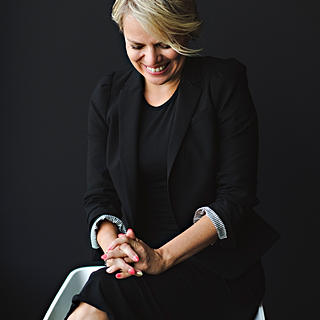
I met Bianca when she was studying architecture, and her illustration work stayed with me long after. Over time, her practice has grown into something layered and quietly powerful, moving between drawing, writing, research, and architectural thinking. For Bianca, drawing is not an artifact but a way of reflecting, meditating, and making sense of feeling. Her work holds space for memory, migration, and the everyday details that often carry the most weight.
Bianca Weeko Martin age 3 in Jakarta Bianca Weeko Martin viewing her work Bianca Weeko Martin illutrating Bianca Weeko Martin's illustration
We met when you were studying architecture, and yo did drawing first become part of your life, and when did it start to feel like something you wanted to follow.
Firstly, I wanted to say thank you again for commissioning my illustrations back then—it gave me so much confidence at that point in my young, sprawling practice. I feel like drawing has always been a part of my life. I have this photo here of me as a kid, maybe three or four and still living in Jakarta, and there’s a piece of paper in front of me and there happens to be a house and tree in my drawing! Ironically, when I started architecture school at Waterloo, I was convinced that I needed to abandon my drawing practice in order to focus on learning about this new and scary field. I remember in the first semester throwing myself into all these new visualization techniques and rendering software even though they produced images that did not feel like me at all. Thankfully and inevitably, drawing seeped back in, and it opened many opportunities for me.
Even though drawing as a primary focus has ebbed and flowed throughout my life, it has remained a constant throughline. I see drawing not as an artifact, but as a process, a way of reflecting, meditating, communicating, framing, consolidating, scrutinizing. In these forms, it’s easy to take with me wherever I go.
You move between writing, research, drawing, and architectural thinking. When you start a new project, what usually comes first for you. A place, a feeling, a question, or something you notice in the moment.
I love this question, Christine! I’m an emotional person so I would definitely say that it’s feeling that moves me first. A project is often a way for me to make sense of feelings, and honestly the feelings that are most inspiring to me are not always the positive ones—there’s grief, yearning, confusion. Drawing can allow me to sit with a feeling and render the details that stay in my memory, making sense of a big jumble of things. Writing and research can equip me with the deeper knowledge required to build empathy or understanding.
This bell hooks quote that opened my Master’s thesis pretty much sums it up: “I came to theory because I was hurting—the pain within me was so intense that I could not go on living. I came to theory desperate, wanting to comprehend—to grasp what was happening around and within me. Most importantly, I wanted to make the hurt go away. I saw in theory then a location for healing.”
Your work often explores memory, home, and the spaces shaped by migration, and your book about Manila adds another layer to that. As your practice keeps changing, what feels like it has been evolving for you lately.
Writing—particularly about those themes you’ve pointed out—has for the past few years made up a big chunk of my practice, and I’ve been letting it evolve from the academic kind to something more creative in nature. Architectural Guide Manila was of course a huge milestone for me in my mid-twenties. However, I see this kind of writing as mainly being in service to a greater goal of documenting and empowering modern Philippine architecture, as well as connecting the various contributors, which I know it achieved. But lately, I’ve been using writing instead to find my voice. I got a small creative writing grant back in the autumn and am in the midst of drafting a collection of short stories, taking as a starting point the Camino de Santiago in Spain and moving between fragments and anecdotes from my own life that speak to the Filipino Canadian experience. This creative writing is super personal, and whenever I share it, I feel vulnerable in a way that I didn’t ever feel with Architectural Guide Manila. So I think speaking more broadly, I am evolving in my practice by becoming more vulnerable, courageous, and honest towards my own voice, without the need to prove myself or meet expectations—whether external or internal.
You have a way of noticing small details that say a lot. What kinds of moments or memories tend to spark something for you and make you want to create.
Thank you for noticing that! I think that noticing and spotlighting small details is all about giving importance and weight to what’s underrepresented. At a basic level, I feel like my background in architecture has given me the tendency to notice minute details—within a building’s supporting structure, or a home’s most intimate corners. But there’s this greater interest I have in elevating the everyday and the mundane. I try to go back into my memories and live out everyday life with a sharper, more attuned eye or ear. I find myself writing down a line or two that stays with me from a conversation with a friend or stranger. I like to pick out a trinket I’ve spotted in someone’s space that holds a story that hasn’t been teased out or articulated yet.
Working across art, writing, and research means the work can shift as you move through it. Has a project ever surprised you, either in how it turned out or in what you learned while making it.
I’m extremely open to a project surprising me and evolving from the initial brief. I think I strive for that, actually. I love complex projects, and I believe a project is complex when it has many layers and can change and surprise you during the research process. I came into both my Master’s thesis and my architectural guide with a preconceived idea of what the final form would be, but also with the acceptance that it could change very drastically. I learned a lot from that—staying humble and nimble as I collaborated with experts in the field. I think my drawing practice also reflects this openness. I make marks that resemble sketches or underlayers, and draw over or cover up previous layers if I feel intuitively that a composition should move in another direction. I like the idea of embracing this element of spontaneity, and iteration. There’s something spiritual about it to me. My drawings often surprise me.
Some of your work deals with deep personal and cultural themes. When things feel heavy or full, what helps you come back to yourself creatively.
I like to be in an immersive natural environment. Preferably in the tropics. A lot of my research and soul work takes place in Southeast Asia, which can of course get heavy due to the legacies of colonization, current politics and, more recently, extreme climate events. However, Southeast Asia is also blessed with an abundance of beautiful, natural landscapes—this is also closely reflected and integrated into traditional architecture and ceremonies. Most of my architectural research is sited within urban environments, but I find it important to balance this expertise with time spent in more remote places. Even if it makes me question my own specialization sometimes! It’s almost like I have designed my life’s work to take me to these places in the most roundabout way. I actually got back from a trip recently. After giving a lecture at a university in Cebu, I roadtripped across Nusa Tenggara Timur in Indonesia, and visited traditional villages and snorkeled near a town called Riung. Swimming in the ocean close to coral and fish, or taking a long walk through the forest at the base of a volcano, are embodied activities that have allowed me to come back to myself, and remember the vastness and variety of a place.
Bonus Question: If you had a full day to follow curiosity, with no research deadlines or writing commitments, what would you find yourself doing.
I wake up in Toronto. I wake up early enough to watch the sunrise, which is awe-inspiring from my balcony on a clear and half-cloudy day. I make my coffee and journal while my head is clear, hopefully I haven’t touched my phone yet. I’ll visit a friend’s new cafe or store, or go to an exhibition opening or artist talk or book launch, or check out a place in town I haven’t checked out yet and just be in a new environment. Later at home, I will read or hop on the internet and learn something new by falling into a deep, hyperlinked, research rabbit hole. If it’s a warm day, I’ll ride my bike to the Muay Thai gym. And then I’ll cook great food.
What struck me most in this conversation is Bianca’s trust in feeling as a form of intelligence. In a world that often pushes creatives to explain or justify their work, she allows curiosity, memory, and emotion to lead. It’s a reminder that making sense of the world doesn’t always mean simplifying it. Sometimes it means paying closer attention to what lingers.
You can see more of Bianca’s work at biancaweekomartin.com.
This series grows through word of mouth and the creative people who nudge me toward the next conversation. If someone comes to mind whose creativity inspires you, send them my way.
Until next week, Christine


