

Between Courage and Curiosity: Laura Condlln on the life of an actor
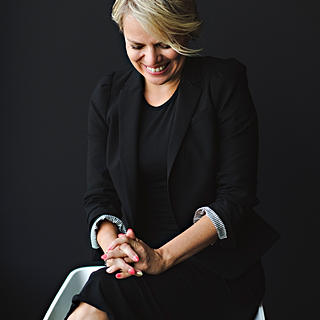
From Stratford to Soulpepper to Mirvish, actor Laura Condlln has spent her career bringing layered women to life. But behind the curtain, what she loves most isn’t the spotlight, it’s the rehearsal room.
In this 6Qs with Christine interview, Laura talks about the power of imagination, how research becomes transformation, and why empathy, not perfection, is at the heart of her craft.
Laura Condlln on stage acting in a play Laura Condlln on stage acting in a play Laura Condlln on stage acting in a play “The big, potentially most important thing about this job is being an empath — a giant breathing spo Laura Condlln on stage acting in a play
You’ve embodied so many layered women on stage, from the intimate to the epic. What first pulled you toward acting, and when did it shift from a love of performance to a lifelong calling?
You're so kind, thank you so much. I've wanted to tell stories and be in the theatre for as long as I can remember. I had a wild and very active imagination when I was a kid. My parents were extremely supportive, and I was lucky to be enrolled in an arts school from grade 4, so that wild imagination was nourished and allowed to fly free. I was so lucky. So, I think it’s possible that it was always my calling – my true north. But to be totally candid, I don’t love performing. Isn’t that ironic?! I love the process, I love the journey; The time in the rehearsal hall, trying to figure it all out. Being in front of an audience still fills me with anxiety.
You’ve moved seamlessly between classic theatre and contemporary work. How do you prepare to step into such different worlds? Is there a ritual, playlist, or small anchor that helps you find your way into a character’s skin?
I love the way you say step into a character's skin, it’s so true. I truly believe our job is to transform and represent a character as authentically as possible. So, it’s different every time depending on who and what that character is. If it's a classical play with a rich history, that's interesting because one can be inspired by what came before – the different interpretations that have been explored before me. And if it's a new play, you literally start from scratch. Both journeys are wonderfully fulfilling and for me it all begins with a lot of research. Whether it's examining and dissecting the play to discover everything the playwright is telling us/me about the character. What are the facts on the page about that person, what other people say about them, what they say about others. Starting there. Or my favourite is when there is source material that the play is based on – a novel or a real person from history – that I can dig into and comb for details that I can strive to bring to life. This part of the work really lights me up. For example, I mined every detail of both of Alison Bechdel's graphic novels when I was preparing for Fun Home a musical based on her and her relationship with her father.
I’m also really inspired by other resources that can enhance my understanding of the world of the play. Often something to help understand a time period or a style. This includes paintings from the period that the play is set in or tv or movies or music. It's all so helpful to unlock the imagination and work towards inhabiting someone really different from me. For example, I was really inspired by the original Swedish TV series The Bridge when I was preparing for Enemy of the People. I believed that the character of Dr. Stockman was a brilliant genius, but on the spectrum and the female detective in that show had just a kind of energy and quirks that I thought were right to be influenced by. And while preparing to play Malvolio in Twelfth Night I really got hooked on a British TV series called Professor T, which follows very uptight gentleman with OCD. This was perfect for the tightly wound Malvolio I was building.
Live theatre asks for emotional endurance most of us can barely imagine. What’s the hardest or most demanding role you’ve ever played, and what did it teach you about your resilience?
The big, potentially most important thing, about this job is being an empath. A giant breathing sponge that absorbs then reflects humanity in all its complexity and contradictions. And it’s true that it requires stamina – but also boundaries. This is something I am still trying to learn. I am very emotional person and that is something I bring to my work, but it can also get in the way – be too much. I think the most demanding example of this was when I played the sister of a character who is dying of AIDS in a play called Casey and Diana. In the final scene. I have to say goodbye to him while also apologizing for all the horrible mistakes I've made, and that was hard. Hard to do and hard to sustain, but worth it. I loved that play.
You’ve worked with so many legendary companies including Stratford, Soulpepper, Tarragon, and Mirvish. Each has its own rhythm and chemistry. What does a great creative partnership feel like for you, and how do you know when it’s working?
I love how you say 'rhythm and chemistry' – it's so true. Every company, every rehearsal hall, is different and every journey towards making a show is different – and some go more smoothly than others. I think it's important to step into every opportunity and new space open-hearted and nimble; ready for anything. One of the greatest things about this industry is that because the contracts are often short, your environment and the people you're collaborating with constantly change. On one hand that can be challenging because nothing is ever consistent or stable, but on the other hand it's very stimulating, and you can never tire of the "same old thing". But you do have to be ready to dive in freely right away. There's no time to be guarded. The only thing that doesn't change is the focus on the work. Making the best production – telling the best version of that story – possible.
Has a role ever surprised you? A moment or character that caught you off guard and taught you something new about who you are?
I've never met a role I didn't like, and I can honestly say they've all surprised me. But it's true, some of them are bigger more humbling challenges than others. Sometimes I think something will be quite smooth to step into and it turns out to be really turbulent and challenging and a farther reach. And other times my expectation is that something's going to be really hard and I'm not entirely sure how (or if) I will find my way. Then suddenly I discover it’s way easier to access than I thought and am surprised that it resembles parts of me more than I knew. We're all so full of contradictions aren't we?!
What still gives you that electric feeling about theatre, the thing that makes you want to step back into rehearsal rooms again and again?
I think it's the investigation and the voyage of discovery. Every time is fresh and new. And it's the people – the theatre community is so brilliant and beautiful. It's so thrilling to join with people you respect and admire, feel a sense of belonging and work towards a common goal. It's glorious.
Bonus question: Which character or moment from a production has stayed with you the longest, the one that still lingers years later?
Singing the finale in Fun Home. It was the most magical, transcendent moment I've ever experienced on stage. Every time we came to it, I felt so fulfilled and free. And I got to share it with Hannah Levinson and Sara Farb. What a gift. Singing Easy Street in Annie with Mark Uhre and Amanda Lundgren is a close second.
Laura’s story reminds us that creativity isn’t always about performance, it’s about curiosity, courage, and connection. She shows that the real work often happens behind the scenes, in the quiet rehearsal rooms where imagination and empathy meet.
This series grows through word of mouth and the creative people who nudge me toward the next conversation. If someone comes to mind whose creativity inspires you, send them my way.
If something here made you smile, pause, or think, share it. Tag a friend. Leave a note.
Until next week, Christine


