

Finding Your Voice with Amanda Kind: More Harmony, Less Perfection
Updated: Aug 2
Some people find their voice quickly. Others take a little longer.
Amanda Kind has spent years teaching singers, performers, and beginners, and if there’s one thing she's learned, it's that growth doesn’t follow a timeline.
We talk about confidence, creative seasons, Mariah Carey, and why the people who surprise us most are often the ones we least expect.
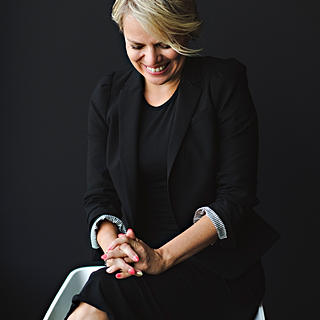
Amanda Kind "Some people are quick starters. Others are a slow burn."Amanda Kind Amanda Kind on stage Amanada Kind
You work with people on something really personal. When did you start to realize that voice is about more than just singing?
My voice has always felt like a core part of my identity. It has never been just about singing. For me, music has always been connected to family. I grew up in a Mennonite family on my mom’s side, where holidays were spent singing in harmony around the piano and playing music together. My mom was an advanced pianist, my uncles played guitar, and music was woven into the fabric of our lives. I’ve been singing for as long as I can remember.
The voice is such a unique instrument because it’s the only instrument we can’t see. It lives inside our bodies, and it is profoundly affected by how we feel physically, mentally, and emotionally. Because of that, I’ve always understood that when people bring their voices into a lesson, they’re bringing a piece of themselves.
As a teacher, I’m aware that voice is deeply connected to confidence, identity, and self-expression. Our vocal tone is as unique as our thumbprint. My teaching philosophy is not about creating copies of some ideal singer. It’s about helping people cultivate their own distinct voice and retaining what makes them unique. The little imperfections, cracks, cries, textures, and stylistic qualities that resemble someone’s speaking voice are often the very things that make a singer memorable.
I’m a huge Brené Brown fan. She talks about the courage it takes to be seen, and I think singing is one of the purest examples of that. When people share their voice, they are sharing part of their humanity. My job is to help them do that while building confidence and staying true to themselves.
People come to you at all different stages, from beginners to professionals. What do you notice they all have in common when they walk into a session?
No matter their experience level, people tend to walk into lessons carrying two things at the same time: bravery and vulnerability.
Sharing your voice can be intimidating. Inviting someone to help you improve it through feedback is even more vulnerable. Whether someone is stepping into their very first lesson or preparing for a major performance or recording, they are putting a piece of themselves on display.
Because of that, I try to be intentional about the language I use. I aim to give them information and tools that help them make their own artistic decisions. A huge part of my job is empowering people to trust themselves.
I find that many artists are searching for validation from the outside world. I get caught in that trap too. We want someone else to tell us we’re good enough. But what matters more is discovering what makes us feel most like ourselves. I’m on that journey and I try to help my students on that journey. Simon Sinek talks about the importance of knowing your “why,” and I think artists are at their strongest when they understand the deeper reason they create and perform. Confidence grows when your choices are rooted in authenticity rather than approval.
There’s a lot of vulnerability in using your voice. How do you help people move past that and actually trust it?
Helping people move past fear starts with changing their relationship to failure. I believe deeply in making mistakes, learning from them, and continuing anyway. And of course we don’t want to spend all of our time failing big time, but small failures where we’ve tried and learned are awesome. I use a lot of play-based learning because play creates freedom. When people are focused on exploration instead of perfection, they often discover abilities they didn’t know they had. I try to highlight joy, curiosity, and progress. Singing should be fun.
I often tell my students that it’s easy to sit in the cheap seats and judge. It’s much harder to get on stage, try something new, make mistakes, and keep going. But that’s where growth happens. Brené Brown says that vulnerability is not weakness, it’s courage. I believe that wholeheartedly. Every time someone sings in front of another person, they are choosing courage. Every time they take a risk, they build trust in themselves.
So much of life is spent dreaming about what we might do one day. The actual doing of the dream is messy. It involves uncertainty, setbacks, and moments when things don’t go according to plan. I encourage my students to embrace that mess. To love learning as much as achievement. The journey is every bit as important as the destination.
You’ve experienced both being on stage and cheering people on from the side. What feels different about those two moments?
They’re very different experiences, but both come with their own joys, anxieties, and lessons. I think it’s important that I continue performing because it reminds me how vulnerable it is to put yourself out there. There was a period in the early part of my teaching career when I wasn’t performing much, and I was definitely less aware because I had forgotten how scary it can be to perform.
It’s easy to tell people what to do. It’s much harder to walk onto a stage and do it yourself.
Performing keeps me humble. It reminds me what it feels like to take risks, work through challenges, and keep going anyway. I am working on accepting that dwelling on one imperfect moment in an otherwise wonderful performance doesn’t serve me. Instead, I am trying to acknowledge it, learn from it, and use it as fuel for growth.
Being in the audience is a different kind of vulnerability. When I’m watching a student or friend perform, I’m emotionally invested. I want them to succeed. Sometimes I find myself holding my breath and willing them toward the moment they’ve worked so hard to achieve.
In both situations, I spend a lot of time reflecting. What went well? What could be stronger? How can I continue to improve? Whether I’m evaluating my own performance or supporting someone else, I’m always looking for ways to grow. At the heart of that process is humility. We can be proud of where we are at while still believing there’s room to improve. Those two ideas can coexist beautifully.
What’s a moment with a student that stayed with you or surprised you?
One of the biggest lessons teaching has taught me is that you never know when someone is going to bloom. Some people are quick starters. Others are a slow burn. Time and time again, people have surprised me by developing in ways I never could have predicted. Someone who struggles for years may suddenly find their confidence, their artistry, or their voice seemingly overnight.
Experiences like that have taught me not to count people out. People grow on their own timelines. We often see someone’s current chapter and assume it tells us the whole story. But we never really know where someone is at in their journey. They may be preparing to bloom, or they may be quietly growing roots beneath the surface. We live in a world that can be quick to judge, and these experiences constantly remind me to lead with grace. I try to offer people the same patience, kindness, and understanding that I hope others would extend to me.
When you’re working on your own voice or creative work, what helps you stay connected to it?
Creativity comes in seasons for me. There are periods when ideas flow freely and others when I feel completely uninspired.
I’m often inspired by other people’s art or by experiences in my own life. Some of my best ideas arrive when I’m not actively looking for them - driving in the car, standing in the shower, or letting my mind wander during a quiet moment. What I’ve learned about myself is that creativity needs space. It doesn’t thrive when every minute of my day is scheduled. Unfortunately, I’m someone who loves to fill every available pocket of time, so creating space is something I’m trying to intentionally practice. Simon Sinek often talks about creating conditions where people can do their best work. I think creativity works the same way. Inspiration can’t always be forced, but it can be invited. For me, that means protecting time, embracing stillness, and learning to say no more often so I can say yes to the creative work that matters most.
Bonus Question: What’s a song that instantly changes your mood, no matter what?
“Always Be My Baby” by Mariah Carey.
If that song comes on in the grocery store, the mall, or my car, I know it’s going to be a good day. The “do-do-do” hook is impossibly catchy and instantly lifts my mood. I start singing along every single time. Sometimes it magically shows up when I’m having a particularly rough day, and I choose to see it as a little reminder from the universe to shift my perspective. It’s hard to stay grumpy when Mariah Carey is singing in the background.
Amanda teaches voice, but this conversation felt just as much about patience.
We live in a culture that loves quick wins, overnight success stories, and before-and-after photos. Amanda's experience suggests something different. People surprise you. Growth isn't linear. The person who struggles today may be the person who shines a year from now.
That's true in singing. It's probably true in most things worth doing.
Six questions. Countless curiosities.
Thanks for being part of the conversation.
Until next week, Christine


