

Observation Is a Design Skill: Izzy Poirier on Paying Attention
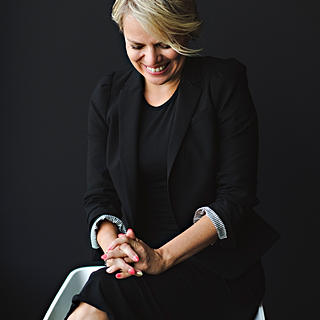
Izzy believes observation might be the most underrated skill in design. Running Ottawa Design Club taught her to pay closer attention than she ever expected to.
Izzy Poirier design work Izzy Poirier as a child with her cat Izzy Poirier's workspace Izzy Poirier's design work Izzy Poirier speaking at an event Izzy Poirier at an event Izzy Poirier design work Izzy Poirier design work Izzy Poirier design work
You once described yourself as “the artsy kid on the outside.” What helped you find your place in the creative world?
I don’t think I ever found my place. I’m still looking for it, and maybe that’s the point. I’ve never really seen design as something with clear boundaries. I’m much more interested in what happens when it intersects with publishing, culture, or community.
As a kid, I couldn’t leave things alone. If I saw a flower, I wasn’t just thinking it was beautiful. I wanted to know how I’d mix that exact colour of paint. If something caught my attention, I had to understand why. I was always pulling things apart in my head, looking for the pattern underneath.
My parents still laugh about the time we found a lost white cat. Before returning it to its owner, I decided it deserved a makeover. I saw a white canvas, not a cat! I grabbed the paint, and by the end of my little experiment, the cat looked like it belonged in a Pride parade. Thankfully, the paint washed off. Looking back, that story says more about me than I’d like to admit. I wasn’t trying to cause trouble. I genuinely saw possibility before I saw boundaries.
I still work that way. I rarely accept an idea at face value. My instinct is always to ask, “What else could this become?” That’s why Ottawa Design Club kept growing into things I never planned. A speaker series became publications. Publications became exhibitions. Exhibitions became partnerships. I’ve always been more interested in following an idea than controlling where it ends up.
You once described RAW (zine) as one of the first projects where the idea carried through every layer, from production to presentation. What does it take for a creative idea to feel complete to you?
A creative idea is never really complete. If there weren’t deadlines, I’d probably keep iterating forever because I’m always wondering what else it could be.
RAW was different.
It was only our third zine, but it was the first time we really gave ourselves permission to experiment. We weren’t just designing around the theme. We kept pulling at the word “raw” to see how many meanings we could find in it. Every time we thought we’d reached the end of it, another interpretation would appear and send us somewhere else.
One of my favourite moments was with the printer. We asked, “Can we spray-paint every cover before printing on top of it?” They’d never done it before, but instead of saying no, they said, “Let’s try it.” The blue spray paint ended up jamming the press because the pigment was softer than the other colours, so those covers became a little rarer. I love that the production process became part of the project. It wasn’t a special effect. It was a consequence of the idea.
That’s why RAW felt complete. For the first time, the concept wasn’t something we talked about. It was making decisions. It shaped the production, the presentation, and even the conversations we were having while we were making it.
Then we launched it, and it stopped belonging only to us. People found meanings we hadn’t seen. They connected with completely different parts of it. They brought their own experiences to it.
That’s probably the closest a creative idea ever gets to feeling complete for me. Not because I’ve said everything there is to say, but because someone else continues the conversation.
Six years into running your own business, what’s something you’ve learned about yourself that surprised you?
One thing that surprised me is how my relationship with the industry’s “gurus” has changed.
When I first started my business, I was convinced they had the answers. I’d watch every talk, read every book, and try to apply what they were saying to my own career. I was hoping someone had already mapped the path for me.
Now I listen very differently. I still find those conversations incredibly valuable, but I don’t take them as instructions anymore. I dissect them. I take what fits my reality and leave the rest. Their advice comes from the careers they’ve built, and while there’s a lot to learn from that, it doesn’t automatically apply to the career I’m trying to build.
I’ve realized that no one has the blueprint for where I want to go because, in many ways, I’m trying to build something that doesn’t have one. At some point, you stop looking for permission and start trusting your own judgment. Sometimes that means recognizing an opportunity. Sometimes it means chasing one. Sometimes it means creating it because it doesn’t exist yet.
That was probably the biggest surprise. I thought experience meant collecting other people’s answers. Instead, it taught me to ask better questions.
What have you learned from building creative communities that surprised you?
The biggest surprise was realizing how little people actually listen to their audience.
When I started Ottawa Design Club, I thought my job was to come up with the ideas. Six years later, I realized my real job was learning how to observe. Every event, every publication, every conversation became a chance to notice what people responded to, what they ignored, what they interpreted differently than I expected, and what kept them coming back.
The funny thing is that the community has no idea they’re doing this. They’re not trying to teach me anything. They’re just reacting honestly. Over time, those reactions become patterns, and those patterns become a much better guide than your own assumptions.
Now I can’t unsee it. I look at brands, events, even businesses outside the creative industry, and I can usually tell when they’re making decisions based on what they hope people want instead of what people are actually showing them. I genuinely believe a lot of organizations would have a much bigger impact if they spent less time broadcasting and more time paying attention.
Building a creative community taught me that observation is a design skill. That’s changed every part of my work.
When Ottawa Design Club started growing, what did you learn about the difference between building something and being known for it?
This is something I’m still trying to reconcile.
When I started Ottawa Design Club, I knew it would take an incredible amount of time and energy. It was always a passion project, but I’d be lying if I said I didn’t also see it as a way to build my career. I wanted to create something meaningful, but I also wanted to become known for the thinking behind it.
What’s interesting is that both happened ... and didn’t happen.
Ottawa Design Club absolutely opened doors for me. It led to speaking opportunities, collaborations, and people reaching out. At the same time, a lot of people only know me through Ottawa Design Club. Or they assume I’m an event planner, which always makes me laugh because that’s probably the smallest part of what I’ve actually been doing.
I’ve introduced myself as the founder on stage, walked off, and had people ask, “Wait ... you’re the founder?” That’s when I realized there’s a real difference between building something and being known for building it.
In many ways, that’s the goal of a great brand. People connect with the thing itself, not necessarily the person behind it. I’m proud that Ottawa Design Club reached that point. But it also creates a strange tension. The very thing that helped build my career sometimes hides the work I actually do.
I’m still figuring out what that balance looks like. I don’t have an answer yet.
What are you finding yourself drawn to right now: the polished or the raw?
I like both, but what I’m really drawn to is intentional work.
I love when I can tell that every decision was made for a reason. Whether it’s communicating a specific idea, drawing attention to a detail, creating a certain emotion, or even making someone slightly uncomfortable, I want to feel like the designer knew exactly what they were trying to do.
That’s why I don’t really see polished and raw as opposites. They’re just different ways of expressing an idea. Sometimes a project needs to feel incredibly refined because precision is part of the message. Other times, leaving imperfections or embracing unpredictability says something that a polished finish never could.
What loses me is when a style becomes the idea. Making something polished because that’s what’s expected, or making it look raw because that’s what’s trending, isn’t very interesting to me. The finish should always have a purpose.
That’s the kind of work I keep coming back to. It can be polished. It can be raw. As long as every decision feels intentional, I’m interested.
Bonus Question: Your website promises a new portfolio this fall. Should we expect a redesign, a reinvention, or a revelation?
All of the above. Stay tuned!
There’s something quietly radical about how Izzy talks about incompleteness, not as a flaw to fix but as the place where a creative idea actually starts belonging to other people. The interview feels less like a case study in how to build a design community, and more like a case study in how to keep noticing.
Want to see more, check out Izzy's website: https://izzypoirier.com/
This series grows through word of mouth and the creative people who nudge me toward the next conversation. If someone comes to mind whose creativity inspires you, send them my way.
See you next week, Christine


