

Over My Dead Body: Kim Hastreiter on Breaking the Internet
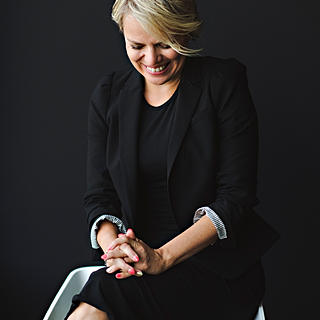
Kim calls herself an editor first. Put her in a thrift shop and she’ll find the Hermès scarf in five minutes. Put her in a room with 100 people and she’ll find the best one. Here she talks about starting Paper as a one-sheet poster, staying weird when no one would fund it, and making things purely for the love of it.
Paper magazine covers over time A drawer full of memores, including a Paper magazine and Obama poster A spread from STUFF: A New York Life of Cultural Chaos, Kim Hastreiter A spread from STUFF: A New York Life of Cultural Chaos, Kim Hastreiter A spread from STUFF: A New York Life of Cultural Chaos, Kim Hastreiter A spread from STUFF: A New York Life of Cultural Chaos, Kim Hastreiter A spread from STUFF: A New York Life of Cultural Chaos, Kim Hastreiter A peek Kim Hastreiter's office
1. As a graphic designer, I was fascinated by how Paper began: sneaking into The New York Times on weekends to typeset and lay out the early issues overnight, hiding in a closet when the fashion editor walked in, and erasing every trace before staff arrived in the morning. What do you remember most about those nights, and what did that guerrilla start teach you about how you wanted to build Paper?
That was crazy. I come from an art background, and I’m kind of obsessive about design, about art, about the visual. My partner, David Hershkovits, was a writer, and we were both at the SoHo News, where I was the style editor. When the SoHo News folded, David was trying to start another weekly. The only other thing in those days was the Village Voice, which was ugly, devoid of style. It had no style. So I said, I think we could get ads if we make it stylish looking. Let me do the style. That’s how we became partners.
We went to Richard Weigand, the art director of Fashions of the Times. He could pass in normal society, but he had this punk rock side, and he brought in Lucy Sisman, an extremely talented art director he worked with at the Times. One day David came in from the subway, threw a Michael Jackson poster on the table and said, we should just start Paper as a poster. Printing cost $4,000, so the four of us each put in $1,000. It was one sheet with 20 ads around it like a Monopoly board. I gave the first ads free to our friends, and if they got the first one free, they had to pay for the second.
Everything back then was that overdone, decorative Memphis look, and I hated it. Then Agnès b. opened in SoHo, black and white, plain and chic, and I went crazy for it. I said, this is what Paper has to look like. The name came from the generic food they used to sell in the supermarket, in black and white packaging that just said spaghetti or sugar. So we called it Paper. The whole thing was set in Franklin Gothic, and the first issue was all based around giant pictures.
Because Lucy and Richard worked at the Times, we did it in their office on the weekends. There were no computers. We made friends with the photostat guy and the typesetting guy and slipped them $20 in the middle of the night. I even learned how to typeset there. The type would shoot through these tubes all over the building. David copy edited in the Times cafeteria, where Bill Cunningham ate all his meals. People thought we worked there. One time Carrie Donovan, this big fashion editor, came in, and they shoved me in a closet with all the boards.
Later we moved it into my loft on Lispenard Street, and kids would come after their corporate jobs at places like Condé Nast and Women’s Wear Daily to lay it out for free. They’d show up with mat knives and rulers and wax machines from their offices. David rode around on his bicycle like the Pony Express, picking up copy. When Fairchild was moving, my father stood on the sidewalk all day guarding 50 giant grey metal desks from the 1940s so we could bring them to my loft in a U‑Haul. You couldn’t even walk in. That’s when I realized we needed an office.
It was completely guerrilla. People don’t do that anymore, right? No one does that.
Bill Cunningham encouraged you to keep Paper on newsprint so you would never lose your freedom, and you held to that through some very lean years. What helped you stay true to that vision when it would have been easier to go glossy?
Well, it was because we could never raise money. No one understood what we wanted to do. Is it a fashion magazine? Well, not really. Is it an art magazine? Well, not really. Everybody wants you to be one thing, and if you’re not, they won’t give you money. That’s been true my whole career. In fact, I’m writing a book about it now.
If Si Newhouse had come and said, I want to back you, we would have said yes. But we were too weird. We tried Hachette, we tried every company, and we got rejected by everybody. I’m actually looking for my rejection letters to put in my new book.
And Bill was like, good, good, don’t sell out to the man. Don’t take money from anybody, because you’ll lose your freedom.
We all had other jobs, and everyone who worked for us had to have other jobs. It was all in my house. If I got sick, I still had a million people coming over. We took the electricity off the street. It was nuts.
Paper didn’t hire journalists. If someone was an expert in an underground corner of culture, David taught them to write, and you’ve described the magazine as a communal art piece. What did you see in people that told you they had something worth saying?
We just knew all these people. It was a really strong community. In those days, the most interesting thing to us was how art and music and dance and film were all mushing together. And New York used to be very diverse. The one thing that wasn’t diverse was that no one from uptown would go below 14th Street, and no one from downtown would go above it. But we would go up to Harlem, and hip hop was starting, so we’d go to the South Bronx.
The city was so vibrant, and the most interesting part was the collaborations. Debbie Harry and Stephen Sprouse, music and art and fashion, all mixed up. That was what excited me. That’s what made me love everything. When the uptown people started hitting the Mudd Club, we all left, because we weren’t into that. We went to Club 57.
Your first answer to putting Kim Kardashian in Paper was “over my dead body.” Then Drew Elliott came back with the idea to call it “Break the Internet,” and the cover did exactly that: 13 million people showed up that night. What did it feel like to watch that happen?
It was amazing. It was such a good story. It was our 30th anniversary, and two of my best smartest kids who worked for me longtime were Drew Elliott and Mickey Boardman. They had both started out as interns and were both amazing and as I after doing paper for 30 years began thinking about moving on from paper I began passing on a bit of editorial ideas and execution to them. Drew was really creative and bright. He was kind of my star.
I’m not a celebrity person. I care more about the underground, the things that aren’t going to get a million views. And I knew my time was coming to an end and I was going to pass the torch to Drew. So when they said they wanted Kim Kardashian on the cover of our 30th anniversary issue, I said, over my dead body. There’s nobody less Paper than Kim Kardashian. Do it any other time, just not for the 30th.
They went outside and smoked cigarettes, then came back and said, can we talk to you? And Drew said, why don’t we do an issue called Break the Internet? Viral was new, and he wanted the whole issue to be people with huge followings. I said, fabulous. See, you came up with a fabulous idea. That’s kind of what I do as an editor. You push people to do something better than mediocre. He came up with it in five minutes. So the 30th anniversary became our OG issue, with people like John Waters and Patti Smith, and Kim went on the next one.
Then the photographer they’d booked fell and broke his arm, and I said, you’re going to shoot it with Jean‑Paul Goude. He’s one of my heroes. He became famous for shooting asses. I mean, Jungle Fever. It was a no-brainer. When Mickey called him, he’d never heard of Kim Kardashian, which made me love him even more. Kim had just fired her whole PR team, so we dealt directly with Kim, and she turned out to be super nice. In Paris it was just Jean‑Paul, his assistant, Mickey, Drew, Kim and her makeup artist. No press, no posse. She did every single thing. She took off all her clothes and bent over and looked through her legs. They were calling me all day saying, you’re not going to believe it.
When I saw the pictures, I thought, our website is held together with Scotch tape and glue. The IT people said if 50,000 people come, the site will crash. So we worked for a month to get it ready. Everything was barter. When you do something really great, people volunteer because they want to be part of it. We launched at midnight, and it was like a NASA space launch. I was at a dinner party showing people the cover, and everyone was dying because she was completely naked. I was getting texts: 100,000, 200,000, 300,000, a million, two million, three million. It went to 13 million that night. Then newspapers were calling from India, South Africa, China, Russia, Chile, every country.
Jeffrey Deitch called me and said, Kim, this is art. And I said, I know, right? It was art. No one had ever heard of Paper, and in one night, 13 million people knew about us, after we’d struggled for 20 years. Drew invented the term “break the internet,” and I really credit him with the idea and the strategy. It worked big time.
Sharing your collections and special finds in Stuff is incredible: 448 pages, more than 1,400 images and five years of work. In your essay “Why This But Not That,” you write about your rule of never living with anything you don’t think is excellent. When it came to the book, how did you decide which stories made the cut?
I’m doing a sequel to it now. It’s called Work, and together with Stuff it’s going to be a diptych.
I’m an editor. That’s what I’m good at. You have to be ruthless. You can’t get too attached to anything. But you have to tell the story, and it has to make sense. It’s like editing a movie. It’s a journey. The worst thing is when people get bored in the middle of a book and just close it. You have to keep the heartbeat racing so people keep wanting to turn the page. That’s what I’m doing right now with my new book. I’ve gathered everything, and I have a really great beginning and middle, but I don’t have the end yet.
Endings are always hard.
Put me in a thrift shop and I’ll find the Hermès scarf in five minutes. Give me 1,000 photos and I’ll tell you which one is number one. I don’t just buy art. I go to the studio and buy the artist’s best piece. Put me in a room with 100 people and I’ll find the best person and talk to them the whole night. That’s one of my strengths.
During the pandemic, from your park bench office, you created The New Now: free of charge, free of ads and free of the internet. It feels like Bill Cunningham’s advice coming full circle. What does making something purely for the love of it give you?
That was wonderful. I consider it one of my art pieces, kind of a public artwork. I really missed seeing people. We were all kind of trapped, and I was curious. What the fuck is going on? What does everybody else think this is? So I set up my office on my park bench, and people came to talk to me.
I found out these young kids were driving to a parking lot by the water in the middle of the night, turning the music up really big and having dance parties outside their vans. Other people found a plot of land that was all overgrown and fixed it up into a little park. A lot of people were isolated or depressed.
So I came up with the idea to do this newspaper. I got young people and old people, all my friends, to write little things about what was going on. Aggie Gund gave me a list of great books, Ted Muehling talked about nature, Andre Walker talked about God, and I had illustrators drawing for it.
Bonus: I had one more question saved for Kim: would she share a soup recipe? We’d already been talking for an hour, and she’d been so generous with her time that I let it go. Lucky for us, she shared her wild mushroom soup with Family Style.
Kim says she can find the Hermès scarf in a thrift shop in five minutes. I believe her. In Stuff: A New York Life of Cultural Chaos, she writes that she would never live with anything she doesn’t think is excellent, whether it’s a coffee cup, a lamp, a new friend or a chair.
At first that sounds like snobbery, and I love that about her. But the more she talked, the more I heard an editor. For Kim, taste comes down to choosing: the one photo out of 1,000, the artist’s best piece, the most interesting person in a room of 100.
As designers, we edit all day. We cut the extra line, the extra colour, the idea we love that doesn’t serve the story. Kim’s way of thinking is a good reminder to be picky on purpose, in our work and in what we surround ourselves with.
To find her book: Stuff: A New York Life of Cultural Chaos, co-published by Damiani and Amazing Unlimited
Images courtesy of Kim Hastreiter and reproduced with permission from her book Stuff: A New York Life of Cultural Chaos, co-published by Damiani and Amazing Unlimited (2025). Text and personal archives © Kim Hastreiter. Photographs in situ © Jeremy Liebman. Cover art © Jim Joe.
Kim at her park bench office: photo by Annie Schlechter, Kim’s Office sign: Max Rippon, First issue of Paper (June 1984): designed by Lucy Sisman and Richard Weigand, “APER” piece: Erik Brunetti, “The Ten Principles of Bad Design”: from Jim Walrod’s show “Difficult” at R & Company gallery
This series works because people keep pointing me toward the next great conversation. If someone’s creativity has been inspiring you lately, tell me who they are. I’d love to talk to them next.
Until next week, Christine


