

Flow Is the Main Quest: Ryan Antooa on joy, grief, and creative energy
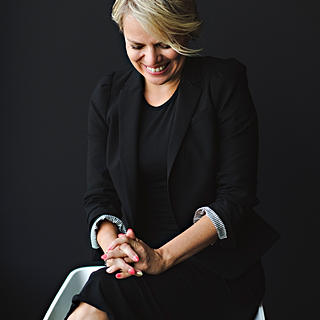
Ryan Antooa built a creative life through side quests that feed the main quest. Dance, design, music, writing, photography. Each discipline became a tool he now draws on at STUDIOFORM, where strategy, art direction, identity, and writing meet. His spark begins with research and lands in flow. His compass often checks in with his seventeen year old self for the honest answer. Grief reshaped his pace and priorities, and rest became part of the work.
Ryan Antooa Ryan Antooa design exploration Ryan Antooa design exploration Ryan Antooa design exploration Ryan Antooa design exploration Ryan Antooa's mom Ryan Antooa flower album cover art Ryan Antooa
You’ve built this amazing creative life, design, writing, dance, photography, music, teaching. When did it click for you that all of these could actually live together as a career?
Great question. I didn’t even realize I did that many things until you wrote it like that! I don’t know if there was a succinct, decisive moment where I said “these can all live together,” but a collection of moments over years. I think only now, in my early 30’s, that I understand how these artforms and disciplines can all work together.
I look at life a lot like Zelda; you can just jump into the main mission, or you can go do a plethora of side quests to gain experience, perspective, and tools to help with the main quest, once you get back to it – and it’s always there. Up until now, I feel like I’ve been side questing; I grew up as a dancer and gymnast, I went on to be a copywriter, I bothered all the art directors I worked with to teach me Adobe Illustrator and graphic design, I snuck into art school at Emily Carr in Vancouver, I learned photography and with that, Photoshop and Lightroom, and then took graphic design seriously around 28-29 (the time I met you, Christine!).
Once I stepped into career roles and projects that required art direction and multiple skills – writing, design, photography – did I realize that all of these things could live together as a career.
Now that I run STUDIOFORM, we work on projects all the time that require strategy, art direction, logo design, and sharp copywriting – and all the skills I’ve gained from the side quests of my life come in handy.
And, with personal projects, I can write, shoot, edit, design, and animate everything on my own. Even for musicians and artists I work with, for example, on their brand identities and album rollouts – I can handle everything from start to finish. I put out three albums this year and handled all the animations, album covers and rollouts for each of them, which shows that all of these skills and passions and side quests were worth it.
When you jump into something new, what does that first spark usually feel like? And does it change depending on whether you’re dancing, designing, or making music?
Maybe it’s due to my original Science background in school – but I’m research obsessed. I spend hours sifting through magazines to study layout, watching design interviews, studying logomarks and poster designs, researching works from my favourite designers and architects – so I’m always learning and observing, which I think is the key to staying sharp and inspired in an ever evolving creative landscape.
The one thing that ties all the disciplines together – that “spark” – is a flow state. Typically, this refers to when you zone in on a project, craft or task, and become completely immersed in the experience, with no sense of what time it is, other tasks, etc. Even writing the answers to these questions, right now, I’m in one of those states; coffee in hand, a candle burning in the background, and house music humming in the background. TL;DR: I like getting lost. I think a lot of us do and don’t necessarily get the chance to, with the business and demands life can put on us.
So, when I jump into anything new, I research and observe first, and then typically an idea, a thread, a tool, or a combination of ideas from my mental archive makes itself apparent. For one of my latest albums, FIVE RINGS, the idea came to me after watching Interstellar and going for an evening walk, thinking “how can I make an album that feels like the convergence of space and time?”. And that theme itself steered the direction of how I played and produced the entire thing, and then even the animation work I did after for the album rollout.
Even with branding work for our agency, STUDIOFORM – the initial projects always start with research, and then the first part of that flow state and thread of inspiration is nailing the logomark and logotype. Once that foundation is set, the rest of the identity falls into place.
Children never ask themselves the meaning of life; they’re busy living it and getting immersed in things they love. The more I think about “sparks” in projects, the more I realize that the five-year old version of me knew best; practice joyful immersion without expectation of yourself or the results.
Every creative path has its bumps. What’s one that really tested you, and what did you take away from it?
I’ve had so many arcs and eras of my career already, which in many ways is exciting, but also requires a massive degree of work and focus each time I’ve pivoted and shifted. I’ve had so many cases of becoming excellent at a discipline – copywriting, photography, motion design – and then quickly shifting the focus to another craft or discipline, bringing along all my prior skills with me. The best analogy I can give is the feeling of moving to another country; it’s exciting, but you also have to potentially learn a new language, ways of living and customs, sort out living arrangements, banking and phone changes, work challenges, etc. So, at many of those inflection points – and I’ve had several of them – I had to shift to being an absolute beginner again, and sometimes I felt like I was losing progress in my life every time I did (spoiler alert: I wasn’t. Life is Zelda and all those skills and experiences travel with you).
If there was an ultimate bump in my path, it would be my mother’s death, two years ago. She had cancer for two years, passed away, and it’s now been two years since, so four years total of absolute hell for myself and my family. Understandably so, I was in the worst mental, physical, and spiritual place I’d ever been in; doing anything creative was the last thing on my list. Just surviving everyday was a challenge. I think for my family, we pushed down all of our feelings in a concerted effort to show up in the best way we could for my mom – and we did – but once she passed, it’s not like things were over; all the suppressed sadness and frustration and grief came to the surface, so we’ve spent the past two years dealing with all of it.
For me, I can’t create anything genuinely if the rest of my life is in shambles. So after her passing, I found myself step by step, day by day, rebuilding my life, and only now in the past year do I feel like I’m “back” to my creative self. There’ve been many, many things taken away from her passing, but one of the main things is to just take care of myself and the rest will come. Grief is an infinite inspiration and opportunity to channel and translate an unending feeling into art and creative work as a method of coping.
None of us create in a bubble. Who’s shaped your voice the most? And has there been a collab that totally surprised you or shifted the way you work?
The most? Difficult and super interesting question – namely because I can’t point to a single person. If I had to, though, I’d say my mother, because it’s where my fire and desire and ambition all stem from.
If we’re talking about creatives who have shaped my voice: Kanye West, Virgil Abloh, Zaha Hadid, Paula Scher (who I met and was awestruck by!), Rem Koolhaas, Dieter Rams, Aaron Draplin, myself, Chris Ashworth, David Carson (I love Ray Gun Magazine so much), Jan Tschihold, Karel Martens. And that’s just off the top of my (very caffeinated) head – there’s many more, though.
I think the thing about Kanye and Virgil, specifically, was this notion of “you can do it too” in all of their work. Kanye’s 2013 interview with Zane Lowe was really inspiring to me, because in my life, I was trying to go from copywriter to designer, and Kanye was trying to go from just rap to fashion. My own frustrations with people telling me to just “stick to what I was good at” felt parallel to people telling Kanye to just “stay a rapper and producer”. With Virgil, he was the first designer I saw that embodied Marcel Duchamp’s readymade notion, but from a contemporary standpoint, which really shaped my design voice and aesthetic since.
Aaron Draplin shaped my voice in a big way, from a design perspective; when I first came across him, he was SO different than any other designer I knew, who classically wore all black, wore merino turtlenecks, were ultra sophisticated and had horn rimmed glasses, etc.; Aaron was a larger than life figure obsessed with garage sales, and seemed like he could have been a mechanic in his previous life. All my first tutorials in Adobe Illustrator were from his classes and I was hooked on design ever since.
As far as a collab that’s shifted the way I work – Nicole Beno has to be up there! I adore her and have been such a fan of her work for such a long time. We worked together on the cover for my third book, Colours, and a collaborative mural we did for Odd Duck. For me, I can become overly analytical in projects; for Nicole, her way of working is so loose, feeling driven, and experimental – working with her on that mural especially was such a joy and it almost felt like improv. It was the ultimate “yes, and” between two artists and from her, I’ve learned to let go, let feelings guide my choices, and rationalize all of it after.
With so many outlets, I bet there have been some unexpected “aha” moments. What’s one lesson that still surprises you when you think back on it?
So many, but two come up in particular. First: dough needs time to rest and so do your designs; second: would the seventeen year old version of yourself be excited by this?
Because I work so quickly and often dash between disciplines for a project, my inclination is urgency and to just release projects and work to the world – which in some ways is liberating – but I’ve learned to let work rest for a little while and come back to it, to see what adjustments I can make, if any, or if I feel the same way about the work once I return to it. In the first year after my mom died, I wrote another poetry book, and have let it sit for two years; I just recently re-read it and thought “oh, this is really good and worth putting out”, but ended up making some major adjustments to it.
The second one – the seventeen year old version of me being excited by my work – is a great compass for joy and exploration as my true North. Through STUDIOFORM especially, projects come up all the time that are great for business and the portfolio, but maybe don’t light us up as much as far as that creative spark. Whenever I’m in doubt over “do we do this project or not?” I ask the seventeen year old version of myself and he typically has a very blunt, accurate answer to what we should do.
When your energy dips and you’re just not feeling it, what do you do to get yourself back into flow?
It’s pretty simple: get to bed early. Take a walk. Take a nap. Eat a solid meal. Take time away from the task at hand to let my subconscious figure things out, which it usually does. Go for a run or do some heavy training to get the endorphins up. Ask myself what my mom would do in this situation. Call a friend. Study some interesting design work or read a book. Talk to another designer or creative for perspective. Talk to someone completely unrelated to your work and field to get some perspective. Eat some ice cream. Pet a dog. Take some deep, intentional breaths from your diaphragm. Put on a solid playlist (industrial house music and Ethiopian jazz are my favourites).
Bonus: If you could pick one project you haven’t done yet, big or small, what would that be?
I’m so happy you asked this one; anyone close to me knows I won’t shut up about industrial design and architecture. As a company, I’d see STUDIOFORM opening up an architecture and/or industrial design division as a natural extension of the work we do; I’m obsessed with product and work that will outlast me once I die. I think deeply about the profound impact Dieter Rams has had on my working process and philosophy as a graphic designer – but I’d love to make tables, chairs, housewares, and potentially design buildings one day – as a natural progression on my career.
This series grows through word of mouth and the creative people who nudge me toward the next conversation. If you know someone with a story worth sharing, I’d love to hear about them.
If something here made you smile, pause, or think, share it. Tag a friend. Leave a note. I read every one, and you never know whose story might show up next.


