

I Love the Hunt: Mandy Aftel on Scent and Old Wisdom
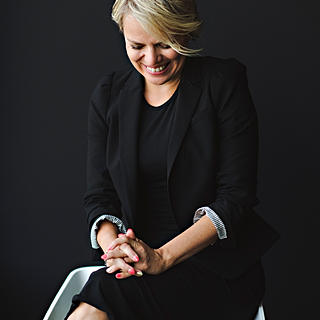
Mandy set out to write a novel about a perfumer and became one instead. Thirty years later, she sells more than 100 botanicals to other perfumers, runs a Berkeley scent museum that sells out every Saturday, and has just released a deck of oracle cards drawn from an old Latin emblem book that had never been translated.
Mandy Aftel at organ Symbolorum oracle deck cover Aftel Archive of Curious Scents Aftel Archive of Curious Scents Symbolorum oracle deck Aftel Archive of Curious Scents
You set out to write a novel about a perfumer, started collecting rare perfume books for research, and ended up becoming a perfumer yourself. When did you realize the story had become your life?
It was so without a plan. I tend to follow what I’m interested in, so that part’s not unusual for me, but I had no idea I would end up where I am at all. I just followed what felt passionate to me.
I don’t know how or why I thought I’d make my character a perfumer, except that I really like learning and research. When I started to read the old perfume books, it was the history of the world and all the important things that had gone on with plants: the witchy stuff, the healing stuff, the sexual stuff, the rituals, the birth, the death. I loved that. Then I smelled the oils. I took a little class to try to make something, as research for my novel, and I was a little bit good at it. It spoke to me.
A friend and I started a perfume line together. This is 30 years ago. I was still a psychotherapist for artists and writers, and I had no desire to stop being one. When the perfume business and the friendship ended pretty quickly, I was kind of obsessed, so I went on. I wrote a book called Essence and Alchemy, which came out of all my research and my love of the materials. There was nobody like me at that time. The world was full of very big commercial lines, mostly synthetic. I just followed my heart and what was interesting to me.
At some point, I couldn’t manage my practice and the perfume. It took me years, but I finally let go of my psychotherapy practice and just did this. It wasn’t a career change where I got sick or bored of the other. I just liked this so much. It had so much depth.
I’ve heard you say that you often smell a dozen versions of the same oil before finding one that surpasses the rest. What are you searching for in that moment?
Oh, I love that. It’s one of my favourite jobs. I sell over 100 botanicals to other perfumers because I’m obsessive by nature. I either really get into things or don’t get into them at all, and what I’m into, I’m really into.
The essences were always what it was about for me. They’re magical, so extraordinarily gorgeous and quirky and interesting, and connected to important things in people’s lives. A really good one is like a superb cheese or an incredible oolong tea. They’re pulsating with life and beauty, with all this dimensionality and all these facets. I look for the one that has the most beautiful aspects of that, and I love comparing them. Because I source them as well as make perfume and teach with them, I’m in this position to shop, thank God.
I don’t do it that often because it’s a lot of work and expensive, but I really enjoy it. Last year I ran out of my patchouli, and the place I’d bought it from was dreadful. Their stuff wasn’t the same. So I went to a lot of places and got lots of little samples to pick from. It was just fun. It’s like finding a diamond. You find the best one and it’s just sparkling.
I love the hunt. I think that’s very much a through line for me. I love hunting for beauty, finding small things of incredible quality, and the whole experience of looking for them.
For almost 30 years, everything you’ve made has been free from synthetics, and some of your essences are antiques that have aged for decades. What has been the hardest part of working with only naturals?
Working with them is pure pleasure. It’s really fascinating. The hard part is in the world at large, where there’s so much dishonesty. Customers think what’s in their perfume is real oud or real jasmine. They think it’s natural, and it isn’t. All those rose fields you see from the very expensive brands have nothing to do with what’s in the bottle.
It’s very hard to find your way in those conversations without feeling like you’re a Debbie Downer, which I’m not. It’s hard to explain how different naturals are from synthetics, so I don’t explain it much. But that perception makes it hard for me to figure out how to explain what I’m doing.
You’ve written two books with chef Daniel Patterson and have been supplying your Chef’s Essences to chefs since 2003. What has working with chefs been like?
Working with Daniel is a dream. He’s brilliant and so talented, and he approaches making food the same way I approach making fragrance. We had a lot of crossover in the process of working with really great ingredients, choosing this tomato rather than that tomato. And as you know, cooking is totally aromatic, so there’s a great crossover in the ingredients we both use. Long ago, we did a dinner where I made blood orange, saffron and ginger bath salts, and he put that into a dish. We did a lot of scented meals together.
A lot of the people who buy my Chef’s Essences are mixologists, winemakers, chocolate makers, ice cream makers, restaurateurs and bars. The aromatic part of the plant is where it’s at. When you rip a basil leaf, what you’re in contact with is basil oil. It’s the oil, and how good that oil is, that makes the plant taste or smell like that. When you press your finger into the skin of an orange, that’s orange oil. It’s just another layer of sensual activity with these miraculous ingredients.
Daniel is really innovative in what he does, and we share that creative process with those ingredients, even though we’re going in different directions. I’ve only done a tiny bit of what he does. I once flavoured a chocolate bar, which was fun. Otherwise, I’ve seen my essences go into a lot of chocolates and ice cream.
SFGate described the Aftel Archive of Curious Scents as a hidden Berkeley museum that moves visitors to tears. What has surprised you most about how people react when they visit?
Oh my God, everything. We have the nicest people visit us. We’re sold out every Saturday, and I say hello to every single person. Not for long, because I’d die, I’m so tired. But I’m on the front line of hearing about their experience and answering their questions. They’re so diverse: all different ages, races, sexualities, health levels, every difference there could be. Fifty per cent of our visitors come back and bring someone with them. There’s this incredible vibe of lovingness, even in the worst of times. It’s an uplifting feeling for them and for me.
They’re also so attentive. I’m obsessive, as I’ve said, and every little detail in the museum is fussed over. If we have a sign for an exhibit, we cut it to fit with the other things in that exhibit. Everything is topped up. I found antique trays in just the right size for each exhibit, and people will say, “Those trays, oh my God, they’re so wonderful.” They comment on everything. I don’t think one visitor leaves without saying thank you for making this place.
It’s so utterly surprising how much it’s resonated with people. When I did it, I thought I’d be in there all by myself, or maybe one or two people would come one day. I didn’t have a plan. I didn’t think we’d have hundreds of visitors every month when we’re only open one day. These things I’d collected for 30 years kind of miraculously came together and looked beautiful. Of course, we worked on it for three years, but that doesn’t mean you’re going to make it gorgeous, and it did, in a way that felt right for us. We get to meet these wonderful people, our neighbours, or people who travelled all the way from Japan to be sure they were in Berkeley on a Saturday. It’s shockingly great.
You’ve written that finding your essences is a quest you enjoy as much as creating them. What keeps that quest exciting for you?
When I find a new essence, which isn’t so easy, when I look for the weird (and I have some very weird ones) or the rare, they’re like a world in a bottle. They’re so complex, so beautiful, so rich. Because they’re my palette, like paints, I’m always thinking, what could I do with that? What if I put that with this?
To me, making a perfume is like cooking. Things have a function. They’re doing something, smell-wise, to something else in the perfume to bring it to its conclusion. Because I’ve done it for so long and because I teach, that whole art process is endlessly fascinating to me. It’s full of revisions. It’s a little like an eye chart, bringing it more and more into focus until the intention I had is very crisp.
All my perfumes start with two essences that are far apart in smell and will make a third, and a feeling I want to capture in a bottle. That’s how I teach and that’s how I work. Everything that goes into the perfume works with those first two essences to drive it toward that feelingful conclusion. I’m still learning. I haven’t gotten to the bottom of any of this, nor do I think I will, but I sure love it.
Bonus Questions: You first came across the Symbolorum et Emblematum through a single sentence in an old book. How did that one line lead to your new oracle cards?
It’s an interesting story altogether. I now have several books in the museum from the 16th and 17th centuries that people thumb through with gloves: the big old herbals, a book of secrets. I stumbled on this one in a very odd way. I read one sentence in an old book that mentioned the Symbolorum et Emblematum, and I just thought, wow, that’s a cool word. I’d never heard it. So I went online to see what the book was, and it had these unbelievable pictures, tiny engravings about the size of a coin.
I found a copy and bought it. It was very expensive and entirely in Latin, and it had never been translated. So it was the hunt again. Getting it translated was a whole journey, but I got the entire book translated: 400 emblems, 100 birds, 100 fish, 100 quadrupeds, which include mythic creatures, and 100 plants. They were so amazing that I wanted to share them with the world. I worked on the translations, looked up all the symbolism, and watercoloured them all. I couldn’t stop wanting to know what was going on. One of my absolute favourites is the four kinds of love, embodied by the lion, the eagle, the siren and the dragon. Its motto is “Love is the cause of everything.”
That became my book Symbolorum, with Abbeville, who also did The Museum of Scent. But I couldn’t leave the others behind, so I picked 60 that weren’t in the book for the cards and wrote a little guidebook to go with them. I used the original writing, and I also added to it from my many years as a psychotherapist. Each card has a scent pairing too, something good to smell as you get into the card.
You can pull one each day, which is what I’m hoping people will do, and get some guidance from this old wisdom that hasn’t been published since the 1600s. It’s such a privilege to be able to make them. I feel very lucky.

Near the end of our conversation, Mandy asked me to pick a number from 1 to 60 so she could read me a card from her new Symbolorum Oracle Cards. I picked 33, my favourite number.
This one is Rose. Rosebush with Bees: “Let all experience be your teacher. Happy are those who can use a cunning mind to transform a problem to their advantage.” Since antiquity, bees have been held in high regard, as they exemplify industry, diligence and community. Bees visit all flowers, even those with a bitter or acrid bouquet, and make honey from them all with wondrous skill. Sensible people must rely on careful study and a sense of judgement, so that they can gain advantage not only from the best experiences, but also from situations that are not so favourable. One is wise who discerns what is useful, not one who knows many things.
I’m taking the bees with me. Not every project is a rose, but there’s always something to learn.
To find out more about Mandy, the Aftel Archive of Curious Scents, the Symbolorum Oracle Cards or her Chef’s Essences: https://www.aftelier.com/
This series works because people keep pointing me toward the next great conversation. If someone’s creativity has been inspiring you lately, tell me who they are. I’d love to talk to them next.
Until next week, Christine


