

No Mistakes, Just Possibilities — Jill Mathers on teaching, encaustic, and letting the work evolve
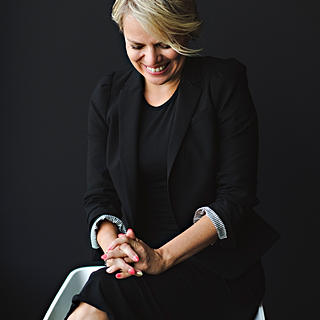
Jill Mathers has spent more than 30 years teaching art, but her connection to it started much earlier.
As a child, it was simple. A new box of crayons. Colour, possibility, something to explore. Over time, that early joy became something deeper. A way to express what didn’t always have words.
Her work now centres around encaustic. Wax, heat, layering, and quick decisions made in the moment. A process that doesn’t leave much room for overthinking.
In this interview, she reflects on teaching, stepping away from self-judgment, and what happens when you stop trying to get it right and just keep working.
Jill Mather artwork Jill Mather artwork Jill Mather artwork Jill Mather artwork Jill Mather artwork
You’ve spent more than 30 years as a teacher. What first drew you to art in a way that felt personal and lasting?
Ever since I was a little girl, nothing brought me more joy than opening a brand-new box of crayons or magic markers. The colours felt full of possibility. I loved not only making art, but also looking at it and, later in life, collecting it. Art was always my favourite subject in school—it felt fun and freeing, a time in space where imagination mattered as much as skill.
What began as simple childhood delight gradually became something deeper and more personal. Creating art gave me a language for self-expression. Through colour, design, and experimentation, I could communicate feelings and ideas that could not always be put into words. I started taking painting classes at an early age and soon branched out into other mediums, driven by curiosity and a desire to explore my creative process more fully.
Over time, art became more than an activity—it became a lifelong passion and something I felt called to share with others. I was fortunate to specialize in art throughout my teaching career, and it has been a true gift to be paid to do what I love: create art and inspire others to do the same.
What is it about encaustic that keeps you coming back to it as your primary medium?
What keeps me coming back to encaustic is the energy and immediacy of the process. I am a messy, intuitive artist—I work quickly and rarely focus on minute detail. Encaustic demands that same spontaneity. The wax must be kept warm, the layers fused with heat, and decisions made in the moment. There is very little room for hesitation, which suits the way I naturally create.
I discovered encaustic three years ago during a course with Susan Fisher at the Haliburton School of Art and Design, and I was immediately hooked. The combination of hot beeswax and resin, heated palettes, molten pigment, and the use of a heat gun or blow torch felt both exciting and slightly unpredictable. The physicality of the medium—the heat, the scent of wax, the carving and layering—makes the process immersive and almost meditative.
What truly draws me back, though, is its versatility. I can build layers, scrape them back, and incorporate watercolour, collage, pastels, and other materials. It feels limitless. Encaustic allows me to work instinctively while still creating depth and complexity. It is forgiving and allows for endless possibilities.
When a piece isn’t working, how do you know whether to keep pushing or to let it go.
When a piece isn’t working, I rarely abandon it right away. I usually have two or three works on the go at once, so I’m constantly experimenting and problem-solving. Not every risk pays off, and sometimes that leads to frustration. When that happens, I’ve learned the importance of stepping away. I might take a walk, clear my head, or simply shift my focus to another piece.
My greatest challenge is often knowing when to stop. Is the work truly finished, or am I overworking it? There comes a point when I feel tired or creatively blocked, and that’s usually my signal to pause. I’ll put the piece aside—sometimes for days, sometimes for weeks.
It’s still difficult to let go because I invest so much energy into each work. But time gives me perspective. When I return with fresh eyes and renewed energy, I often see possibilities I couldn’t see before. What once felt like a failure may simply need refinement—or a bold decision to lift it out of the ruins.
For me, the balance between pushing forward and stepping back is part of the creative process itself.
How has being an educator shaped the way you approach your own creative practice?
Being an educator has profoundly shaped my creative practice. Over the years, I have learned to leave self-criticism and judgment at the door. In the classroom, there were no “mistakes”—only creative opportunities. That mindset has transformed the way I approach my own work. I strive to create the way children do: with curiosity, boldness, and a sense of joyful abandon. It’s about embracing the process—the colours, the shapes, the storytelling, the simple act of capturing a moment.
As an art teacher, my superpower was helping students navigate their artistic challenges. I offered solutions when they felt stuck, encouraged risk-taking, built their confidence, and celebrated their progress. Often, a few thoughtful suggestions would unlock something extraordinary, and a masterpiece would begin to emerge.
Now, I try to extend that same encouragement and grace to myself. I remind myself—as I reminded my students—that the original vision is rarely the final outcome. The creative process is a journey, sometimes messy and unpredictable, but with patience, perseverance, and persistence, something meaningful takes shape. You have to follow your curiosity, take risks, and trust that the work will evolve.
Is there a specific landscape or moment in nature that has quietly influenced your work more than you expected?
While there isn’t one single landscape that defines my work, nature has quietly influenced me more than I ever expected. I divide my time between painting the big skies, lakes, and forests of Lake Huron and northern Ontario, and moments spent in my garden. Nature calms me—I can breathe. The water brings peace, the forest offers comfort, the sky opens possibilities and freedom, and my garden adds colour and beauty to life.
Over time, I became especially interested in bees and began intentionally planting gardens that attract pollinators. Watching bees and butterflies move from bloom to bloom with focus and persistence is deeply calming, and that rhythm has crept into my work. Colour, layering, and organic forms often echo what I see growing in my garden.
The connection becomes even more literal through encaustic: my medium relies on beeswax, tying the process directly to the creatures that inspire me. Whether it’s the calm of water, the expanse of sky, the shelter of the forest, or the vibrancy of my garden, all of these natural elements feed my creativity. My studio and my surroundings are extensions of each other—spaces of growth, patience, and quiet meditation.
What do you hope someone feels when they stand in front of one of your paintings?
For me, painting is like a form of prayer. I pour love, passion, and intention into every piece, and I hope that energy comes through to anyone who stands before my work. I want viewers to feel a connection—whether to a memory, an emotion, or something larger than the physical world. Lately, I’ve been exploring the study of light, striving to create an ethereal quality that invites contemplation, calm, and a sense of wonder. Ultimately, I hope my paintings offer a moment of pause, reflection, or quiet joy to those who experience them.
What if nothing you made was wrong?
Jill spent years helping students move past that idea. The same shift applies to her own work now. When you stop trying to fix things, you start seeing what else is possible.
This series grows through word of mouth and the creative people who nudge me toward the next conversation. If someone comes to mind whose creativity inspires you, send them my way.
Until next week, Christine


