

The Art of Noticing. Stephanie Scott on colour, detail, and joy
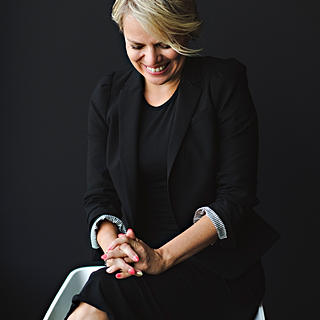
Stephanie Scott’s art is easy to spot and hard to forget. Her murals invite you to slow down, look closer, and find beauty in the details. She mixes structure with a playful sense of flow, creating work that brightens spaces and stays with you long after you’ve walked by.
You’ve become known for murals that brighten public spaces, but your practice carries a quiet depth. When did you first realize art could be more than decoration, that it could hold meaning, memory, and presence, and even invite joy?
This is a great question! I think this is something I’ve always known. I can’t recall a time where I wasn’t at least somewhat aware of it. My first interest in art came from watching cartoons and reading story books, probably like most kids. Seeing that art could be used in a narrative way helped me understand its importance, at least when it came to communication. My family also had a lot of art up around the house, and I was so entranced by it. Each piece was like a different world to me. With scenic paintings I would imagine myself in that setting, exploring every bit of it. With the abstract works I would give them my own meaning. I remember there was one that I thought looked like an ear. That’s what I always saw it as, until one day I asked my mom and she said it was supposed to represent a mother and child. That really opened my eyes to how forms could depict something in a non-literal way. That piece suddenly meant so much more to me.
As for the element of joy, to be honest I don’t think that came until I started doing commissions. It felt important to create work that would be uplifting to the people who saw it every day. I think that has come with maturity as well. When I was younger my work was so cynical. It was more of an outlet for me to express frustration or critique the world around me. These days I prefer creating things that seem whimsical and lighthearted, even if I don’t personally always feel that way.
Your work is rich with detail, colour, and texture. There’s a carefulness in how you plan, but also a playfulness that comes through in the final piece. What does that process feel like for you, moving between structure and spontaneity?
It’s not always an easy process, that’s for sure. When it comes to client work, so much depends on the creative brief. I usually start with the foundational things, which relate to the overall vision of the design, then get playful where I can. If I’m in a good flow then other opportunities for experimentation will open up. Sometimes it can feel like there is a lot of tension between structure and spontaneity, like they’re opposing energies, and I can’t fully explore an idea because I’m trying to refine it as I go. Other times the two work together harmoniously, with that sense of structure helping me streamline the spontaneous elements. It really depends on what I’m working with and who it’s for. When I create things for myself it’s typically frictionless. I move so much faster because I have no concern about fitting someone else’s specifications. I can just let it happen organically, and that’s where those two energies really complement one another.
Large scale public work comes with deadlines, logistics, and plenty of visibility. What is the hardest part for you, and how do you hold onto your gentle, thoughtful approach in the middle of all that?
Each part has its own challenges. With the public art I’ve done, there has typically been a tight timeline and limited budget, which has meant scaling back in certain ways. Sometimes these limitations are helpful, but other times they can hinder the artwork. Projects that have a more generous timeline often lead to better results, because it allows me to be thorough. I think of it like the difference between a tailor creating a t-shirt and a three piece suit. Both can be beautiful, but the suit will be far more customized to the wearer. That’s how I like to create. I want each piece to feel unique to the location and the people in that community.
Balancing work with the demands of everyday life is another thing I find challenging. This isn’t specifically related to large scale public work, but it’s something I deal with daily. I typically work from home, as most of my projects lately have been digital designs which are then printed and installed, as opposed to hand painted. I’ve found that I prefer to work from the time I wake up to the time I go to bed, with a section in the middle of the day where I tackle non-creative things, like household chores, running errands, administrative tasks, etc. This structure has taken so much trial and error to figure out, and it’s still not a perfect balance, but it feels pretty aligned with my natural flow of energy.
You pull inspiration from sewing, fashion, decorative arts, and design history, all rooted in tactility and craft. How do those real life influences shape your work in ways that digital tools alone never could?
I feel like these things ground me, as they probably do for most people. Engaging with things in a tactile way, and working with your hands, can be a far more rewarding experience than creating something digitally. You have more of a connection with something you can interact with in the real world. Even when it comes to finding inspiration or gathering references I prefer to use books or other physical things. When I’m looking through a book I naturally go much slower than I would if I were scrolling, and I absorb far more information.
I don’t know how much this influences my work when it comes to the execution of it, but the themes are certainly there. I have created patterns inspired by traditional decorative arts, painted faux marble finishes, and used scraps of fabric and notions from my sewing projects to create mural compositions. I also find that having a balance between analog and digital really helps keep my mind sharp. Every time I finish a project (or one of the interim deadlines) I take a quick pause to do some sewing. Even if it’s just hemming a skirt or mending a hole in something. When I have more time I do larger projects, like completely reworking clothes or making things from scratch. There is so much problem solving and experimentation that goes into this, which I’m sure translates into my other work.
Your work radiates joy and colour, yet there’s also a deep thoughtfulness underneath. How do you decide how much of yourself to reveal, and how much to keep private?
Hmm…I don’t think I reveal anything too deep about myself, especially since most of my work is client commissions, but I do think I give a lot of myself to it. I devote so much of my energy to every project, whether I mean to or not haha. When I’m working on something I can’t help but get fully immersed.
I think a lot of my interests and curiosities are apparent in my work. I seem to have a subconscious list of things I want to illustrate or incorporate, and each project I find myself selecting from that list. For example, I recently drew an antique carousel horse for part of a mural. I had wanted to draw something like this since I was a teen, after seeing a similar illustration in a book. When I showed my drawing to my sister she said it reminded her of a couple carousel themed Christmas ornaments from our childhood. Perhaps the seed was planted even earlier than I thought! I also did a project a couple years ago where I created a series of fictional film posters for different companies, using the name of the company as the title of the film. I was able to tap into my interest in cinema and match different film genres to each company. I love reimagining concepts through the lens of something totally unrelated, and this project was a great outlet for that. It was perfectly in line with how I like to create.
When someone encounters your work, what do you hope lingers with them after they walk away?
I hope they notice some details that could be easily overlooked, or understand some of the references in it, and get excited by this discovery. I hope they appreciate the small details and feel encouraged to look closer at other things in their life.
Bonus Question: What is something playful or tactile that brings you joy, like sewing, paging through real books, or experimenting with colour just for fun?
Books, definitely. My collection of them keeps growing, and sometimes when I need a break I sit on the floor with a stack of them and just escape for a moment–it’s bliss. I also really love browsing through vintage and antique shops. There’s always an interesting mix of colours, textures, shapes and patterns, all interacting with one another. Plus there’s the element of surprise, because you don’t know what you might come across. Sewing brings me joy when the end result is a success, but usually the process is frustrating haha. Playing around with colour combinations is a lot of fun; I probably wouldn’t have thought of that if you hadn’t mentioned it in the question! My boyfriend recently gifted me volumes 1 and 2 of Sanzo Wada’s “A Dictionary of Colour Combinations” and they are the most relaxing things to look at. I’ve been flipping through them before bed, or on quick breaks during my day, which really helps to calm my mind.
I don’t know if this would be considered playful, but I seem to get the most joy out of interacting with birds and animals. I love feeding the squirrels in the park, and the birds in my neighbourhood. There are some pigeons that hang out on my balcony and they are gradually getting comfortable around me. Some of them will even eat out of my hand. It’s always the highlight of my day when I see them.
Stephanie’s process is a reminder that art can be both public and personal. By grounding her work in tactile inspiration and storytelling, she creates experiences that outlive the first glance.
To see more of Stephanie's work, check out her website: https://www.stephaniescott.design
This series grows through word of mouth and the creative people who nudge me toward the next conversation. If someone comes to mind whose creativity inspires you, send them my way.
If something here made you smile, pause, or think, share it. Tag a friend. Leave a note.
Until next week, Christine


