

Too Much? Watch Me. Ruchika on murals, colour, and stubborn belief
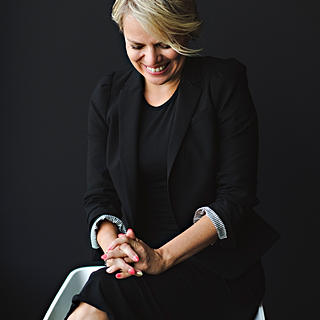
Ruchika has always known she wanted to pursue art. What kept her going was not certainty. It was stubbornness.
Ruchika is a community mural artist based in Canada who took on her first 20 foot mural after being told it was too much. She followed through anyway. That project became a turning point, not just in scale, but in commitment. Representation mattered. Younger girls were watching.
Today, her work as a mural artist moves between large scale walls, portrait sessions, and community conversations with a kind of confidence that feels earned. This conversation is about resistance, colour, and trusting the years you’ve already put in.
Ruchika Khati painting a mural Ruchika Khati Ruchika Khati mural
What early projects or experiences made you realize this was something you wanted to take seriously?
I always knew I wanted to pursue art, but it was my stubbornness that made me stick to it. I’ve often been motivated by resistance. Being told I couldn’t do something only made me want it more. Early on, I learned to say “yes” to opportunities before I felt ready and trust that I would figure things out along the way.
Choosing art is often questioned. I didn’t fit into the expected mould, and over time, I learned to be comfortable existing outside of it. I accepted that no one would fully believe in it until they could see it.
My first large-scale mural project became a real turning point. While a few people encouraged me, many questioned it and suggested I drop it. A 20-foot mural was considered ‘too much’. I didn’t. I was young and proud and followed it through. Along the way, I hired art students and trained young women to work alongside me. That project was 7 years ago, and the experience clarified something important: this wasn’t just work I wanted to make; it was work I wanted to commit to, no matter what. I became aware that younger girls and emerging artists of my community were watching, and that
representation mattered. Even more so today.
When you start a new piece, where does the idea usually begin for you?
I’m very visually stimulated, so ideas usually begin with looking at references. I collect them constantly, from other artists to small details I notice in my day-to-day life. I take a lot of photos of things that catch my eye and archive them in mood boards for later.
Focusing on colours and forms.
When I start painting, those observations resurface and gradually find their way into the work. Ideas don’t arrive all at once. They build through accumulation. I try to enjoy the process and freestyle along the way. I’m not as precise or overly prepared as most artists when I jump into a piece, but for me, that is part of the fun.
How has working on murals influenced the way you think about your work as an artist?
Working on murals has fundamentally changed the way I think about my practice. It’s taught me to trust my skills and the thousands of hours I’ve already put in. I’m realizing I’m no longer in the “learning phase” where I worry about materials or technique. On a large scale, hesitation becomes visible, so you have to commit to every stroke with confidence. I have yet to use a grid for my mural projects and prefer starting with a brush or roller attached to a pole for my initial sketch. That approach might change when I work on a much larger piece.
My process has shifted away from execution and towards concept. The hardest part now is the idea. I can trust myself with the execution.
I was reminded of this recently when I felt underprepared for an event and a friend said, “You didn’t practice this week, but what about the years of painting?” That snapped me out of my self-doubt. Drawing and painting are muscle memory at this point. Mural work requires being fully in tune with your body, using it as much as your mind. My body knows how to paint an eye because I have painted it a thousand times. The same goes for different media. I can pick up a new medium, and the process of figuring it out is just as much fun. I think more artists need to take pride in the hours they’ve spent honing their craft, rather than letting their work be dismissed as “talent,” as if it were just fate.
How has spending time in conversation with other creatives shaped your own practice?
I seek out other creatives not just to learn about their practice, but to get to know them. I do the art part while painting them throughout our conversation, giving them space to talk about anything they want. I’ve been fortunate to have friends who are creative and a
community that has embraced me as a newcomer. Their presence has added so much to my life beyond work and art, and I hope to offer that kind of connection to others as well.
The idea for “Paint & Pod” comes from my experiences drawing caricatures at events and having lively conversations with people. It’s a running joke that artists rarely get the chance to have someone else draw them, and I love painting portraits, so this project felt like a natural extension of that. I was inspired by another creator online, but I’m making it my own. I’m also inviting people outside the art community to join these sessions this year, creating connections that go beyond just art.
What part of your creative voice are you learning to trust more over time?
If you had met me ten years ago, you wouldn’t have believed how scared I was of colour. I clung to mediums like graphite and charcoal for dear life. Over time, I discovered watercolours and oil, moved onto digital mediums, and even jumped into VFX, learning to colour grade. Along the way, I’ve gradually overcome my fear of colours and fallen in love with them instead! Colour has become one of the most alive parts of my work. I love playing with palettes, mixing tones, and watching a piece find its way to exactly what I imagined or sometimes something even better.
Today, all my murals and paintings start with primary colours, and I prefer to mix my own tones and hues. This approach works perfectly with my more impressionist painting style and has become a part of my creative voice that I trust more with every project.
When you feel creatively stuck, what helps you find your way back?
This one might actually stump me! Lately, I’ve been asking myself the same question. I’ve noticed I haven’t painted for myself in a couple of years, outside of commissions and paid projects. Art isn’t a daily part of my life like it used to be. I always carry a sketchbook with me, but I haven’t reached for it as much as I used to.
I’ve always believed that happy artists make good art. Creating from low or difficult experiences has never worked for me. I tend to practice art in moments when I feel content, even if it’s not constant happiness. Life has been busy with a lot of changes recently, and I think I’ll find my way back when I feel grounded and stable.
Right now, what inspires me most are the moments when I draw caricatures or portraits for people while having fun conversations. Those experiences spark joy, connection, and creativity, and remind me why I fell in love with art in the first place.
Maybe nobody has challenged my choice of making art lately, haha.
Bonus Question: What kind of work feels most alive for you right now?
As I find my way back into more traditional mediums, I’ve realized that exploring other forms of creativity, such as videos and content, and practicing my creativity through conversation, has kept me connected to the art world. Supporting my creative friends and finding ways to collaborate within the community makes me feel alive. As long as I am part of the creative world in any role, I feel like I am exactly where I need to be.
My current role as marketing coordinator at Four All Ice Creams has been a perfect opportunity to stay creative while working within the community. I also enjoy collaborating with KWFamous and Uptown Waterloo BIA whenever opportunities arise, which allows
me to continue creating and connecting in meaningful ways.
There’s a point where preparation stops helping.
For Ruchika, murals made that obvious. At that scale, hesitation shows. You either commit or you don’t.
Over time, execution becomes instinct. The real work becomes deciding what you want to say.
Want more from Ruchika, check out her Instagram: https://www.instagram.com/ruchika_khati/
This series grows through word of mouth and the creative people who nudge me toward the next conversation. If someone comes to mind whose creativity inspires you, send them my way.
Until next week, Christine


