

“New Buildings Have No Ghosts”: Nat Kalbach on Jersey City’s Hidden History
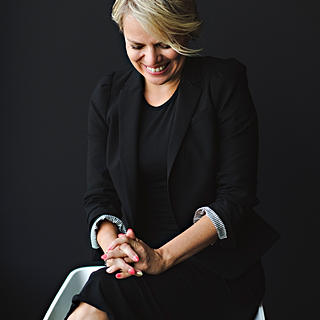
Nathalie spent seventeen years reading other people’s paperwork before she started painting other people’s houses. Now she lives inside a 130 year old home that keeps handing her its own history back, one forgotten resident at a time.
Nat Kalbach's artwork Nat Kalbach Nat Kalbach's artwork
You spent seventeen years as a paralegal handling documents, and now one of the places your paintings live is inside an 1840s ledger of tax collections. Is some part of you quietly getting even with all that paperwork?
Not getting even. If anything, the opposite.
I worked in an office that did a lot of pro bono work, so the files that crossed my desk belonged to people in real trouble. You cannot read that kind of paperwork for seventeen years and still think of a document as a document. Behind every one of them is a person having a very hard year.
I have wondered since I was a child what stories a place holds. Often all that survives is a paper trace. A name in a city directory, a rent figure, an advertisement looking for a girl to do housework. That is not much to go on. But I have always been a reader, and books taught me that one small detail can open into a whole world if you let it. The question is only whether you are willing to be open to that.
The ledger is that same impulse made physical. Old leather, pages someone already filled with careful columns of numbers. Somebody sat and did that, meticulously, for years. It feels like it is waiting for another human hand. Some color. Some story that goes past the numbers in ink.
I love your colours. How do you decide what a building’s colour should say about the people who lived there?
I will be honest, I do not really decide.
It usually runs the other way around. I paint a building I am drawn to before I know why I am drawn to it, and I research backward from the feeling toward the fact. Very often I learn about the people inside afterward, sometimes long afterward.
So the colour is what I felt standing on that sidewalk, not a conclusion about the family in the census record. Pinks, teal, ochre, violet, sometimes vibrant, sometimes muted. Not one of those is the actual colour of any building in Jersey City. They are colours of affection.
Which does mean the research sometimes contradicts the painting. A house I painted with real tenderness turns out to have held people I would have found difficult. I leave the colour where it is. The painting is a record of my attention, not a verdict on theirs.
Another essay of yours is “New Buildings Have No Ghosts.” Is that a loss, a relief, or something else entirely when you come across a brand new building with nothing in it yet?
Neither, really. Impatience, maybe.
A new building is not empty. It is early. Give it eighty years and someone will stand in front of it feeling what I feel in front of an 1890s rowhouse. The ghosts are not missing. They have not moved in yet.
I want to be clear that I am not against new buildings, and I am not against development. I love a lot of modern architecture. My question is narrower than that. Does every old building have to go, and who is deciding which stories we keep?
Because a new building usually means something stood there first. The lot was not blank. So when I say new buildings have no ghosts, what I am often noticing is that the previous ghosts were evicted, and nobody wrote down their names before the demolition. That is the part that stays with me. Not the absence of history in the new thing, but how efficiently the old thing was made to stop counting.
You and Chelsea Castro have an exhibition together opening in January, years after she first appeared as a guest on Nat’s Sidewalk Stories at the end of Season 1. What’s it like collaborating with someone whose story you were once telling?
I should correct the premise a little, because it is a good story either way. Chelsea and I were friends well before the podcast, and we had already worked together on history and oral history projects. That episode was less an interview than two friends talking. She half interviewed me.
What we are working on now is an exhibition about the hundred year history of the Loew’s Jersey Theatre. It opened in 1929, came close to being demolished, was saved by a group of volunteers, then run and slowly cleaned up and repaired by a nonprofit for decades. The city has since partnered with a company that can restore it properly and run it at full capacity. It is a story about a building, but really it is a story about a Palace for the People and the people who refused to let it go.
Chelsea is a graphic designer and I am a painter, and we both want to tell stories about people and make history approachable rather than solemn. We come at that visually but from different angles. How does the information sit in a room? What does a visitor see first? Where does the story turn?
It has been genuinely fun, and it feeds my own work more than I expected. Watching the craft in that theatre come back, the plaster, the paint, the sheer labour of ornament, has changed what I notice when I paint.
While researching your book, If These Walls Could Talk, you found a real former resident of your house, Dr. Edwina Drake Frech, who ran Jersey City’s first pure milk dispensary in the early 1900s. What was it like learning her story while sitting in the same rooms where she once lived it?
Edwina Frech is one of many people I found in this house, and she is a favourite. She was a trailblazer in this city and almost nobody has heard of her.
That is exactly what pulls me, in the paintings, in the research, and in the podcast interviews too. So many people make a place better, and most of them we never hear about. They were not building a reputation. They saw something that was not working and went and fixed it.
There is a detail I think about often. The first time I encountered her, she was Edwin Frech. A physician in 1906, so obviously a man. That happens constantly in this work. Women get misspelled, misgendered, shortened to initials, or left out entirely. Finding them anyway is one of the real pleasures of the research. They were always here, making the place, and then forgotten.
And when I think about the women who came through this house, I think about the hardship too. Many of the servants were immigrants. The record is very clear about which people were wanted here and which were not. I do not look at that history to feel better about the present. I look at it to understand where we came from, and more importantly where we should go, and where we should not go back to.
You record, edit, and share every episode of your podcast yourself, no crew, no studio. You’ve said the thread through Season 3 was that nobody waited for permission before deciding this city was theirs to act on. Where did you learn to work that way yourself, just doing what you can with what you have?
I am self-taught. I came to this country as an adult and started over. No art school, no credential anyone here recognized, nobody’s permission to be a painter.
You can experience that as a deficit for a long time. Eventually you notice it is just a description of a starting position, and that waiting to be authorized is a way of making the wait itself into your career.
So when I got to the end of Season 3 and looked at the nine people I had interviewed, that thread was not something I imposed. It was something I recognized. They made the gallery in the garage. They painted the wall. They started the archive.
The other half of it is that we live in a world of manufactured perfection and manufactured authenticity, and I think it is worth saying out loud that it is fine to make mistakes, and fine to admit you are not an expert in everything. Nobody is. The podcast is how I learn about this city and the people in it, and that is what makes it worth doing. It is not a polished studio production. I am an artist. I am not a podcaster for a living.
Bonus Question. Can you tell us about your next series Inside-Out?
I have been working on a series called Inside-Out. The viewer is placed at a threshold. A car window, a balcony, a rearview mirror. The street is visible but slightly out of reach. That distance is not romantic. It is the particular unease of someone who chose a place and knows she will never fully arrive.
I grew up in Germany and came to American cities as an outsider, and I learned to read buildings as a way of making sense of a place I was not born into. Place is not a backdrop. It is part of who we are.
Nat’s research runs backward from most people’s: she paints the feeling first, then goes looking for the facts. It is a reminder that curiosity does not need permission or credentials to start, and that the version of a story you get from official records is never the whole one.
To see more of Nat's work, check out her website: https://www.natkalbach.com/
This series works because people keep pointing me toward the next great conversation. If someone’s creativity has been inspiring you lately, tell me who they are. I’d love to talk to them next.
Until next week, Christine


